The Work of Carrying Tradition by Hazel Roberts

 The Work of Carrying Tradition
Reflections from Handed Down and the Field
As I read Dr. Oliver’s reflections on the women who carry tradition, I find myself thinking about the many ways those traditions take root in the next generation.
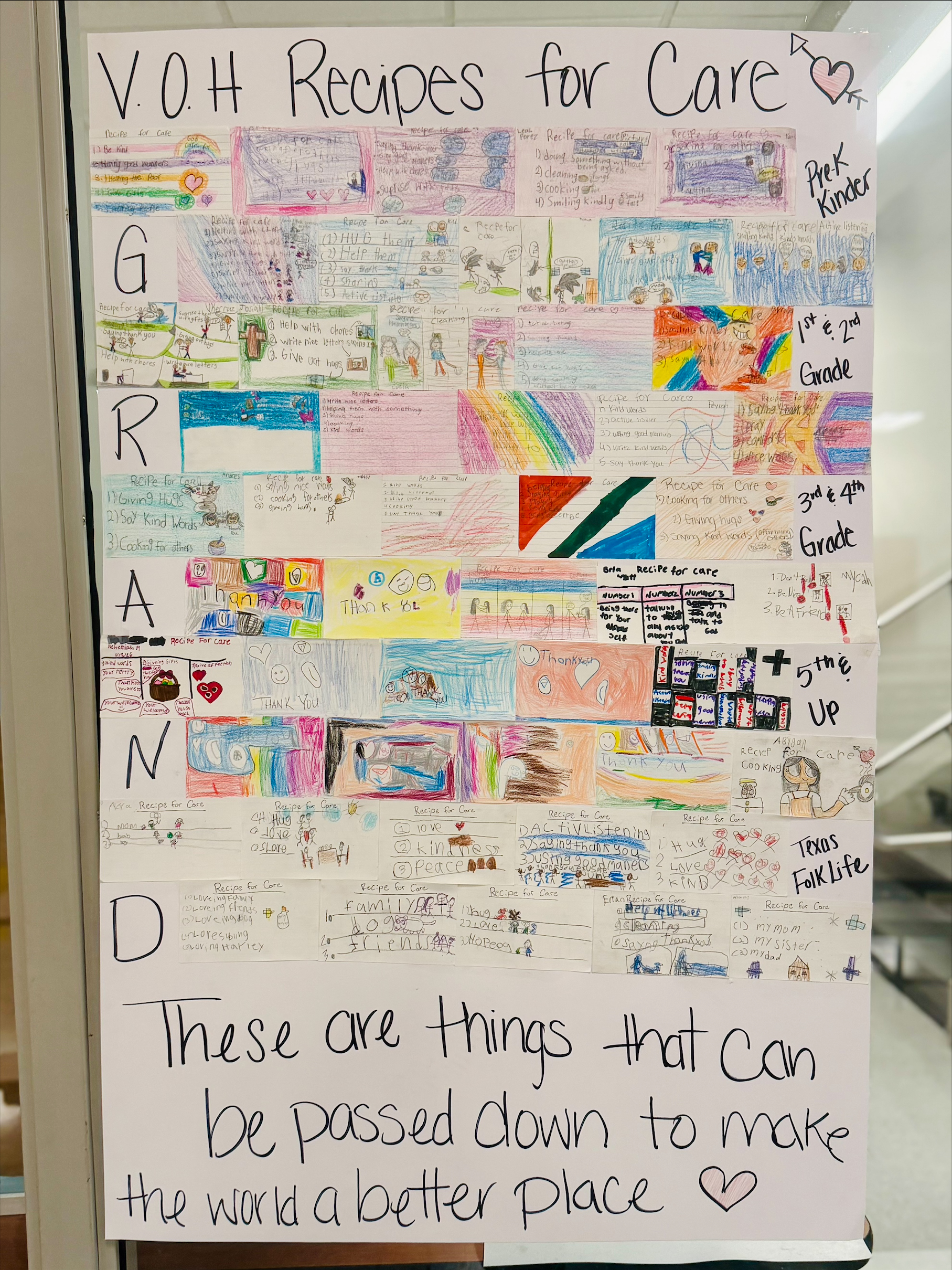
At Texas Folklife, one of the places where this work comes to life most visibly is through Handed Down, our youth folk arts education program. Each Wednesday at Voice of Hope in West Dallas, students gather to explore how traditions shape communities through storytelling, artmaking, and shared reflection.
When we speak about tradition bearers, we often think of elders, master artists, and community leaders who hold deep cultural knowledge. Yet an equally important part of that story is the moment when someone younger begins to recognize themselves within that lineage.
That realization- that culture belongs to them too– is often where the spark begins.
Throughout the spring session, students are exploring themes of community, belonging, and shared knowledge through creative projects and collaborative activities. These moments often lead students to reflect on their own families, neighborhoods, and the everyday traditions that shape their sense of identity.
Later this spring, I’ll also join the classroom as a teaching artist for the final sessions of the program. Together, students will contribute to a collaborative artwork that reflects the ideas and relationships they’ve built throughout the course.
Tradition in Practice
Corn Husk Witness Dolls
One of the upcoming activities students will explore in Handed Down is the creation of corn husk witness dolls– a traditional craft made from dried corn husks that appears in many cultures across North America, most commonly amongst indigenous communities.
Soon the classroom tables will be covered with dyed corn husks, twine, and small figures slowly taking shape in students’ hands.
For generations, crafts like these have been passed down through observation and practice- often taught by mothers, grandmothers, and community members working side by side. By working with their hands and reflecting on the people who guide and support them, students begin to see how creative practices can hold memory, gratitude, and community all at once.
From the Field
“I Come From…” Storytelling Activations
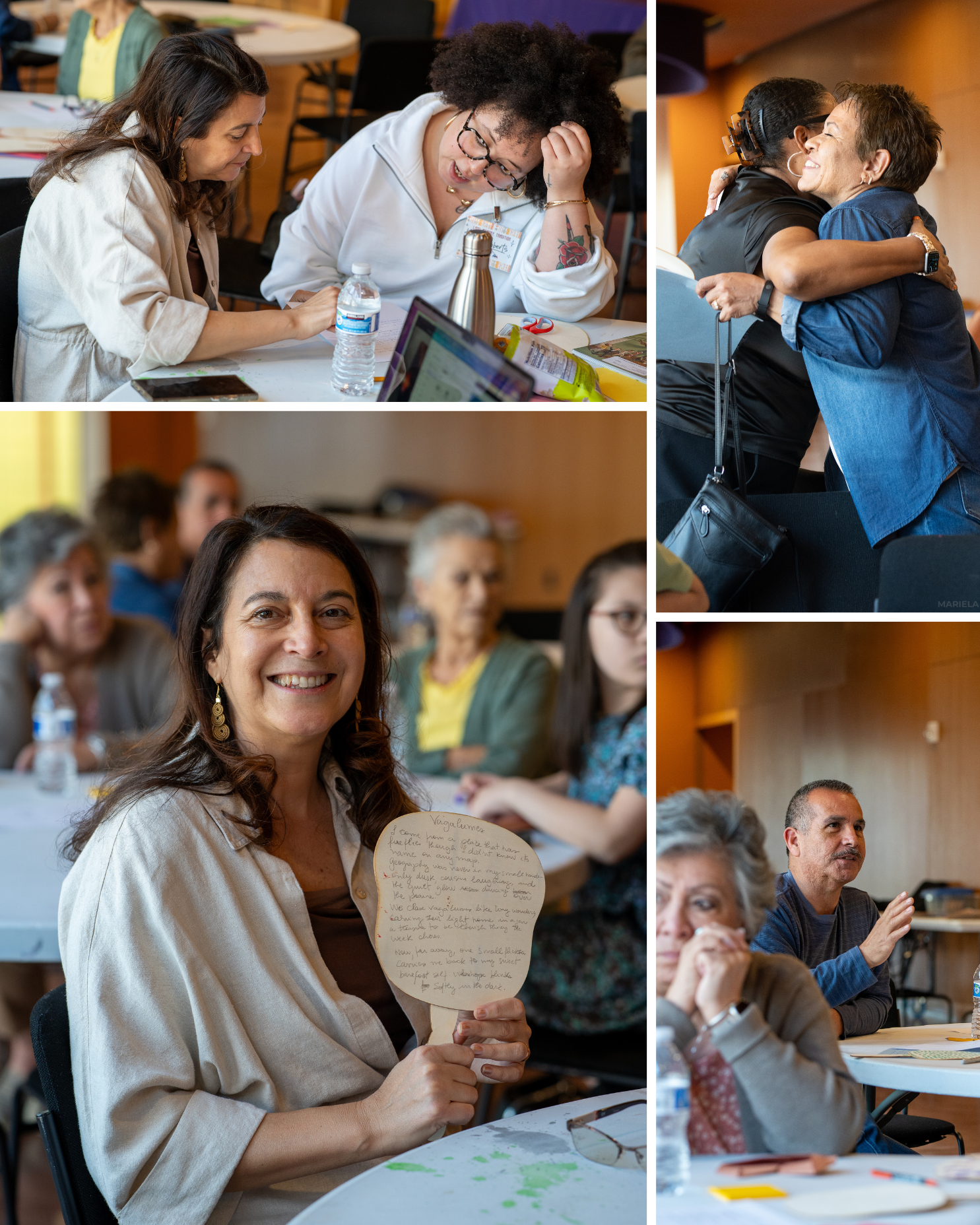
Earlier this month, I had the opportunity to facilitate two storytelling workshops using an activation titled: “I Come From…” with two vibrant communities in our beautiful state.
The first took place during the Land, Memory, and Tradition East Texas Convening in Nacogdoches, a region where stories of land, family, and cultural practice run deep in the soil of East Texas. The second activation took place this past Saturday at the Latino Cultural Center in Dallas as part of the first workshop in our new Roots + Rhythm series, created in partnership with our friends at the LCC.
The activation invites participants to answer a deceptively simple question: Where do you come from? But rather than naming a place on
a map, participants are asked to respond through memory—through sensory details, family traditions, and the people who shaped their lives.
To begin, I shared my own poem, grounding the room in personal storytelling and modeling the kind of reflection the activity invites. From there, I encouraged participants to ground themselves in their memories and draw from their senses—inviting us, their audience, into the sounds, smells, textures, and emotions of their lived experiences.
As people began sharing their poems, something remarkable happened. The room became a space of listening, reflection, and connection. Elders and young participants alike spoke with honesty and vulnerability about the places and people that shaped them. Time and again, we found ourselves traveling through space and time, each storyteller our guide- revealing the memories, traditions, and inheritances that shape who we are. In those moments, it was clear that these storytelling workshops were not just creative exercises; but a way of honoring memory and making space for people to be seen.
And in many ways, that is the heart of folklife work.
Carrying the Flame Forward
Traditions endure because we. the people, carry them forward. Often, that responsibility begins as simply as someone showing a younger person how something is made, sung, cooked, or remembered.
Programs like Handed Down and Roots + Rhythm create space for those moments to happen.
When people across generations are invited to explore the cultural practices that surround them, they begin to see that tradition is not simply inherited. It is lived, practiced, and shaped by each generation.
And in classrooms and community spaces across Texas, we can see that process unfolding every day- small sparks of memory and story being kept alive as they move through communities, from person to person and from one generation to the next.
Hazel Roberts
Manager of Executive + Program Initiatives | Texas Folklife
Quote I’m Reflecting On:
“Know from whence you came. If you know whence you came, there are absolutely no limitations to where you can go.” – James Baldwin
Book I’m Reading:
Thrall: Poems by Natasha Trethewey

![[Laura Yohualtlahuiz] wears an elaborate Mexica danza headdress with long feathers radiating outward in orange, red, and pink alongside brown-and-white patterned feathers. A beaded headband with colorful floral and geometric designs frames her face, which is marked with red linear face paint. She wears a gold septum ring and shell earrings, with a tattoo visible on one arm and a green and yellow patterned top. Warm lights glow in the background.](https://texasfolklife.org/wp-content/uploads/2026/08/Laura_Atlachinolli-614x346.jpg)