Flor y Palma: Traditions of la primavera in South Tejas

Flor y Palma: Traditions of la primavera in South Tejas
by Beto De León, Texas Folklife Community Folklife Fellow
Flor y Palma is an archival project exploring the traditional craft of flores de papel in South Tejas. Handcrafted decorations have been a part of the culture of South Texas for millenia, though the technique and reasons have shifted over time. Before commercially made paper was available a wide array of other natural items were utilized, including corn husks, cattail leaves and palm fronds. In fact tejido de palma (palm weaving) have remained important pieces of the ways people have connected with the land in South Tejas and many people still pass down this practice in their families, though usually connected with the Easter season. In this project I collected stories and plant wisdom from elders of the Chicano/Indigenous communities in South Texas to understand how these crafts have endured and where the future is headed.
Handmade Historias
Like so many other community members, I found my inspiration in the geometry of the plants and trees around us, the ways these flowers bud and unravel into bloom. Each one with a unique pattern and colors designed for optimal attention in their individual ecologies. As women & queer folks from generations past have honed these traditions, I found myself reconnecting with making my own flowers as both an artistic practice and teaching tool. To better understand this practice, I didn’t have to go very far. Like many people in South Tejas, these practices have been important skills handed down through families for generations. In fact, my earliest memory of this craft was working with my mom and grandma to make flores for a church gathering as a child. Later, I would marry into a family who made and sold flowers in Piedras Negras, Coahuila and later San Antonio, TX. I always saw these flores as art but never thought about the importance it played, so this opportunity to get to talk with elders and family about the flowers opened up space to hear more about reflections of Springtime, childhood and memories of Easter. These shapes became for many their own economic opportunities, for selling flores enceradas during holidays, making “coronas” or “cruces” wreaths for tombstones during the dia de los Muertos, selling “coronitas” for children and adults alike. In fact coronitas have now expanded beyond pastel colored paper to offer meaning like pink, blue and white, honoring our Transgender relatives, or in colors representing sports teams, like the San Antonio Spurs. An important reflection is the message is really up to the maker.
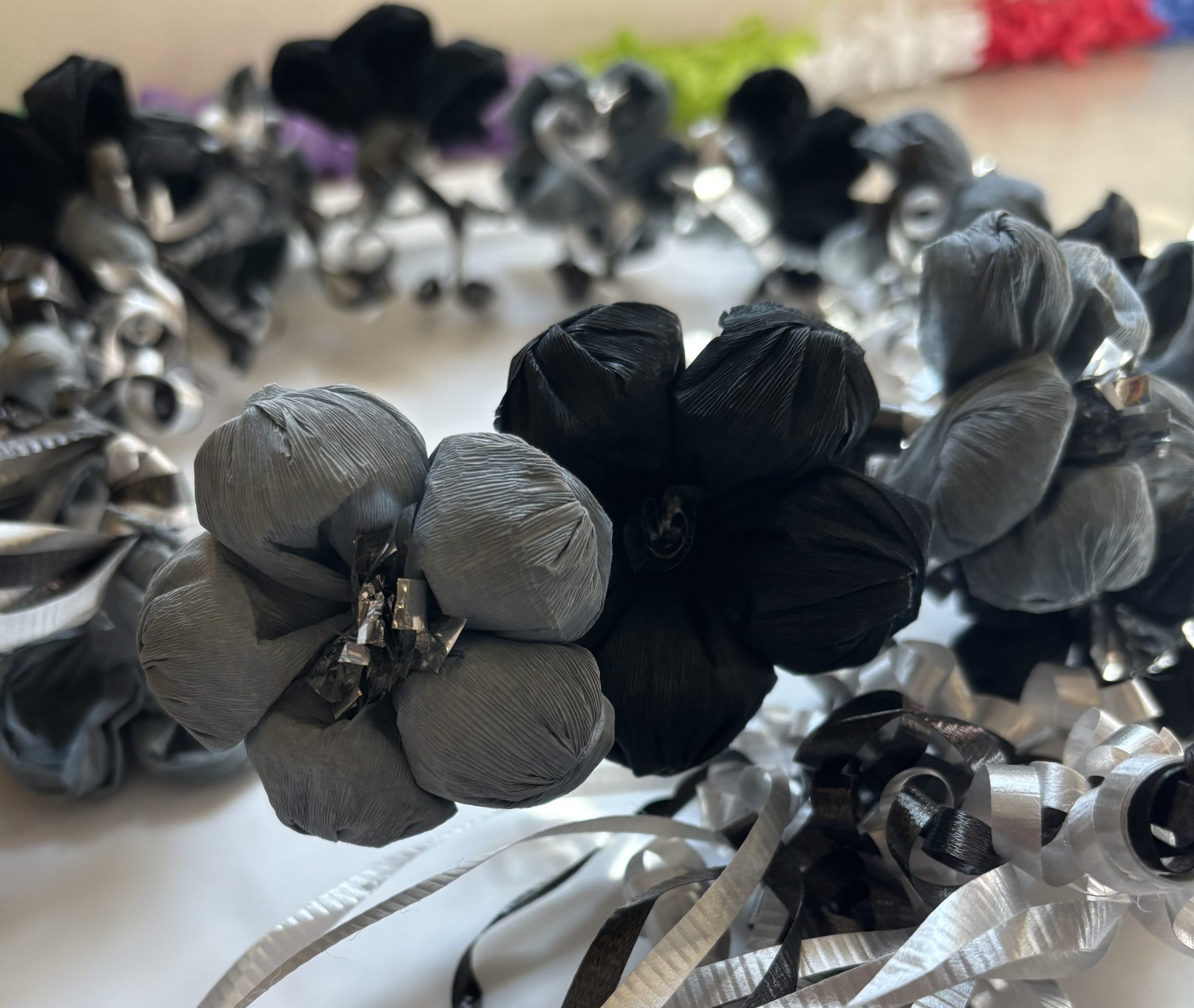
Handmade items like these have supported families for generations. However, the purpose wasn’t always about commerce. Flores de papel have shaped family celebrations, religions festivals and ceremonial spaces for ages. These items created beauty and marked important spaces, often as a type of offering to various folk saints, religious figures, or important spaces. In the home, flores de papel are still used to mark quinceaneras, birthdays, remembrances and more. Many of these reasons have been usurped by colonial or commercialized celebrations which have removed the spiritual nature of these practices into something commodified into items that are both low cost and disposable. However, there is a lot of interest in the community to connect with practices that protect the land, so reincorporating traditions like decorating with natural items helps us connect with the land too.
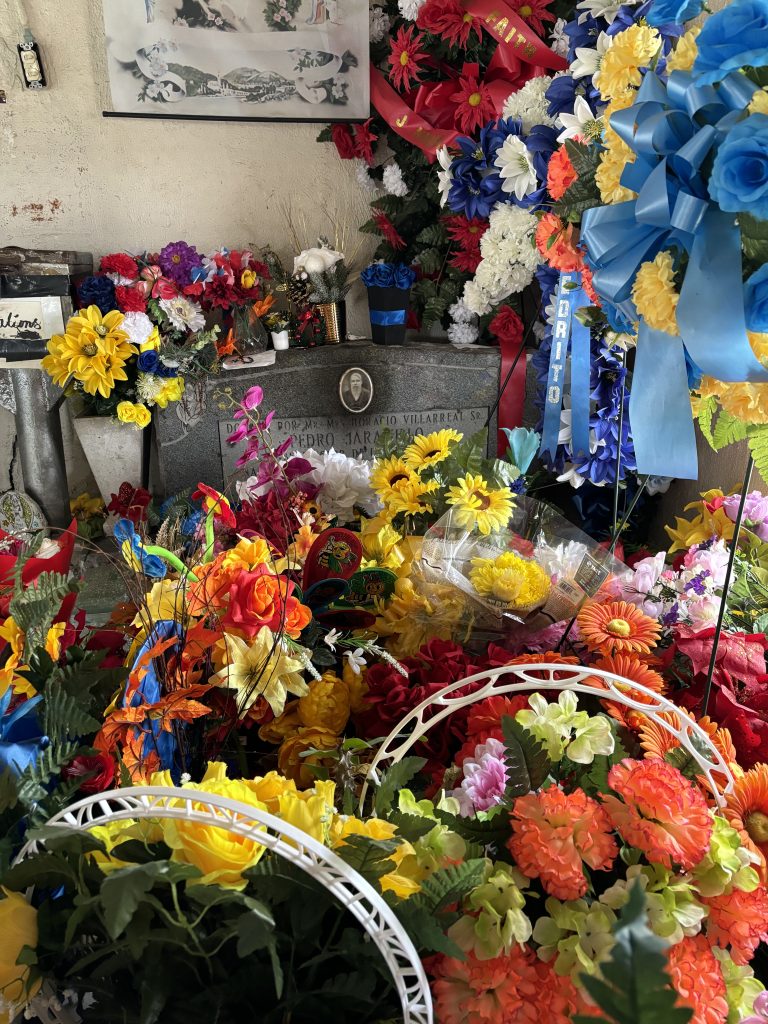
Like many cultures across the world, flowers have left a lasting mark on spiritual practices in South Texas. Neighborhood curanderos make their own perfumes and “aguas compuestas” (fixed waters) waters that may have had flowers, herbs and other items added to give it spiritual properties such as protection or love attraction. Fresh flowers are also important for barridas (sweepings) to cleanse people of negative forces that may be following them. Floral scents also are used for incense, powders and many other items found at the local yerberia (herb stand). Many of these practices have thrived on San Antonio’s westside for generations, but the practices are widespread amongst Mexican, Black and Indigenous communities across our region. Many folkshrines these days have polyester flowers with grocery store bouquets tucked in and other items set up as gratitude for a favor or to complete a promise by a devotee. The shrine of Don Pedro Jaramillo in Falfurrias, TX remains popular to this day with bursts of color mixed in with items marking recovery such as handwritten notes, crutches, photos, and other momentos.
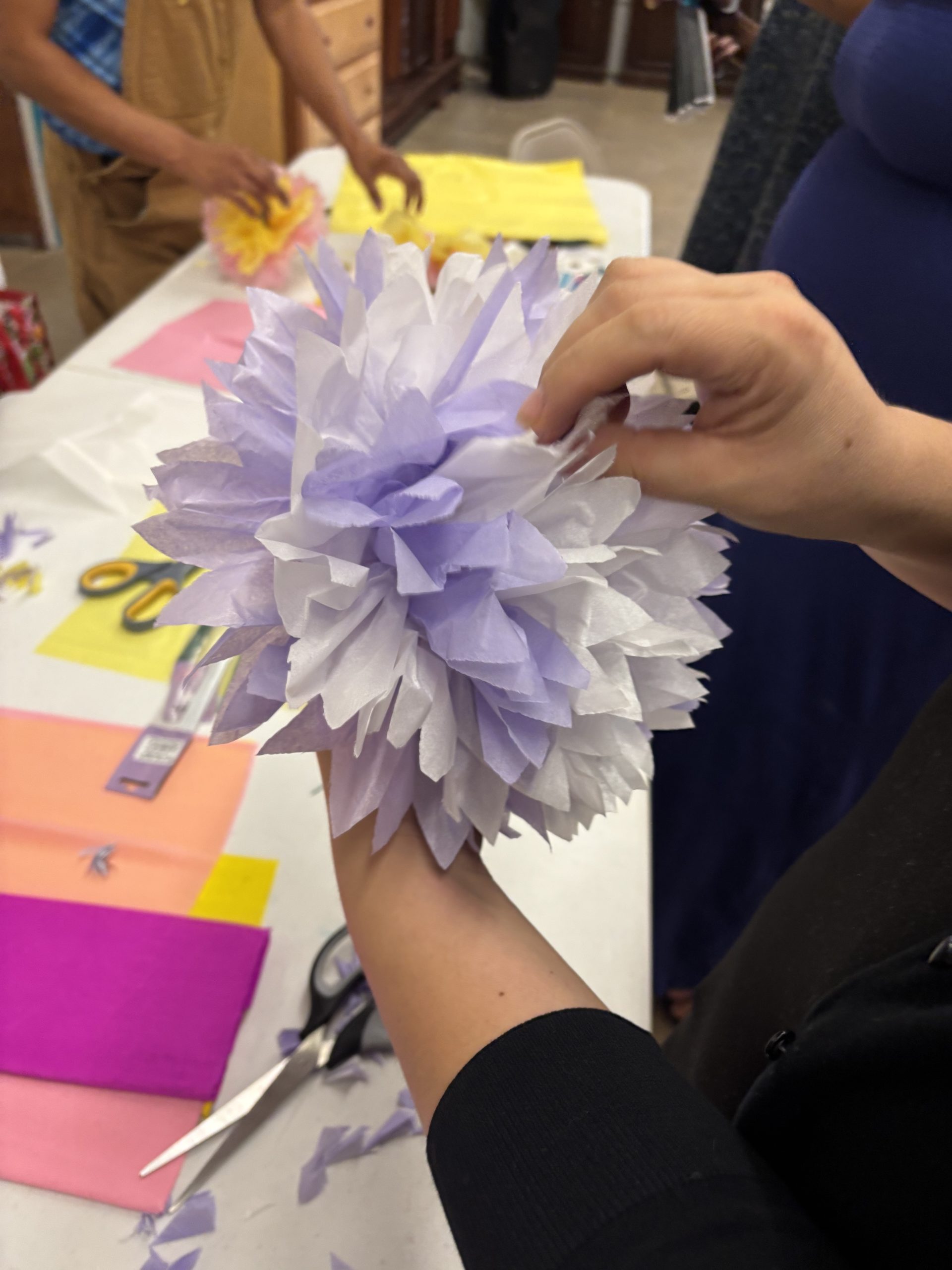
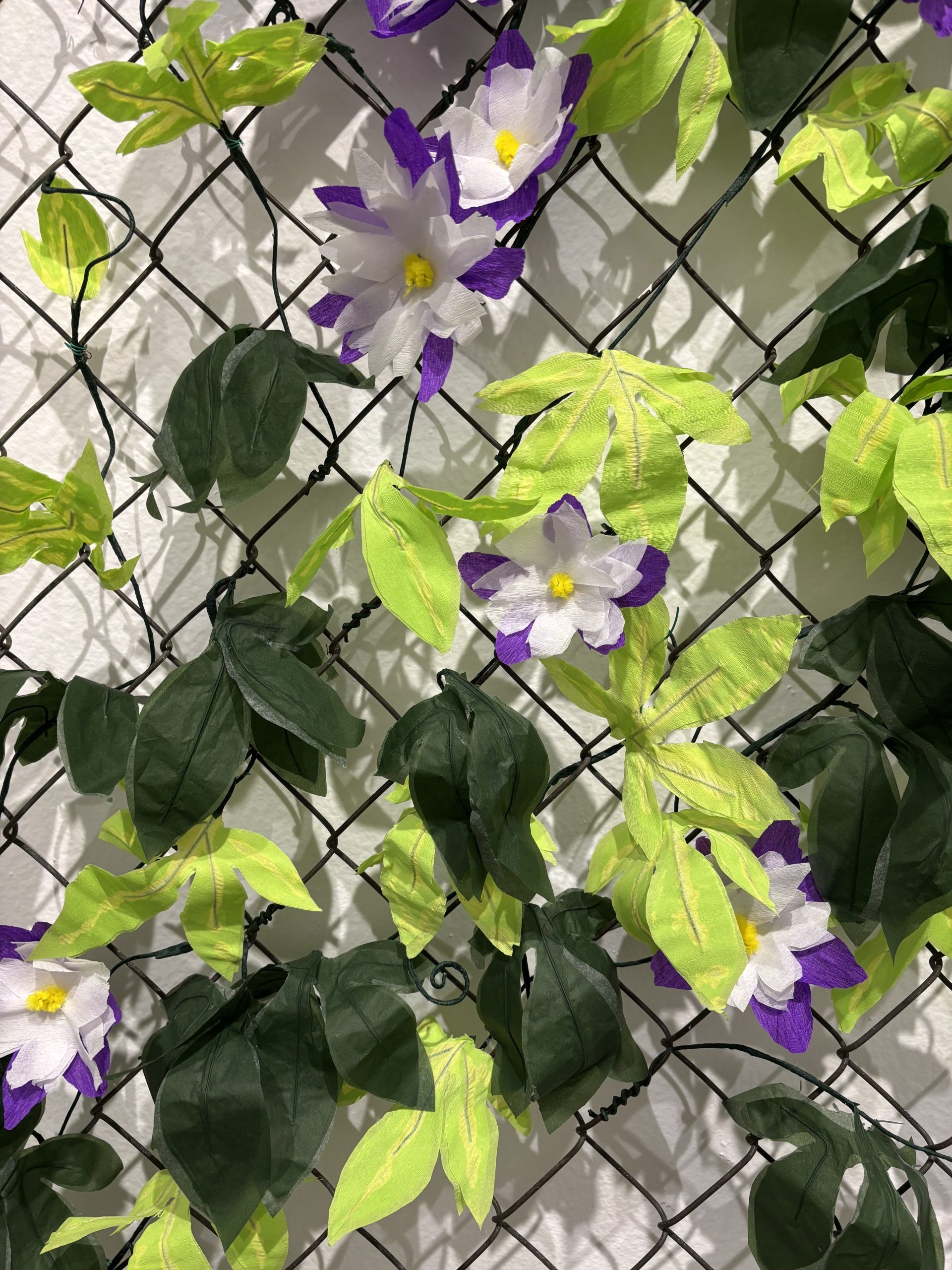
Making flores de papel is a relatively easy process, either incorporating tissue paper or crêpe paper (papel crêpe) or tissue paper (papel china) and sometimes foil or glitter. Depending on what is being made, the flores may be built on floral wire and using floral tape. However foil, clear tape and glue sticks and hot glue are also common. Like piñatas, flores may also be structured around carrizo cane or bamboo depending on what is growing in the area. Paper is cut and given texture to recreate popular flowers or to create new flower styles that may not be found in nature, such as teal colored roses. When the flower is finished it may be given as is or dipped in wax to make flores enceradas (waxed flowers) to make them last longer. Our tia Licha, recalled that when the Gomez family made flores enceradas to sell in Coahuila, they often gathered used candles from the local church and melted them down at home. This resourcefulness is a key component of the craft as Curtis Tunnell and Dr. Enrique Madrid mention in their definitive essay “Coronas para los Muertos” (Graham pg. 136) that flower makers in Ojinaga, Chihuahua would use repurposed wire from old tires to make their flores. As is the case with real flowers, flores de papel are not meant to last, even with proper care, the paper will eventually lose color and shape. Polyester flowers, now what we think of as artificial flowers, can last for years often due to the plastic fabric and industrial dyes used in their creation. Using paper or natural items that biodegrade helps us create without leaving more waste behind.
Producing the Podcast
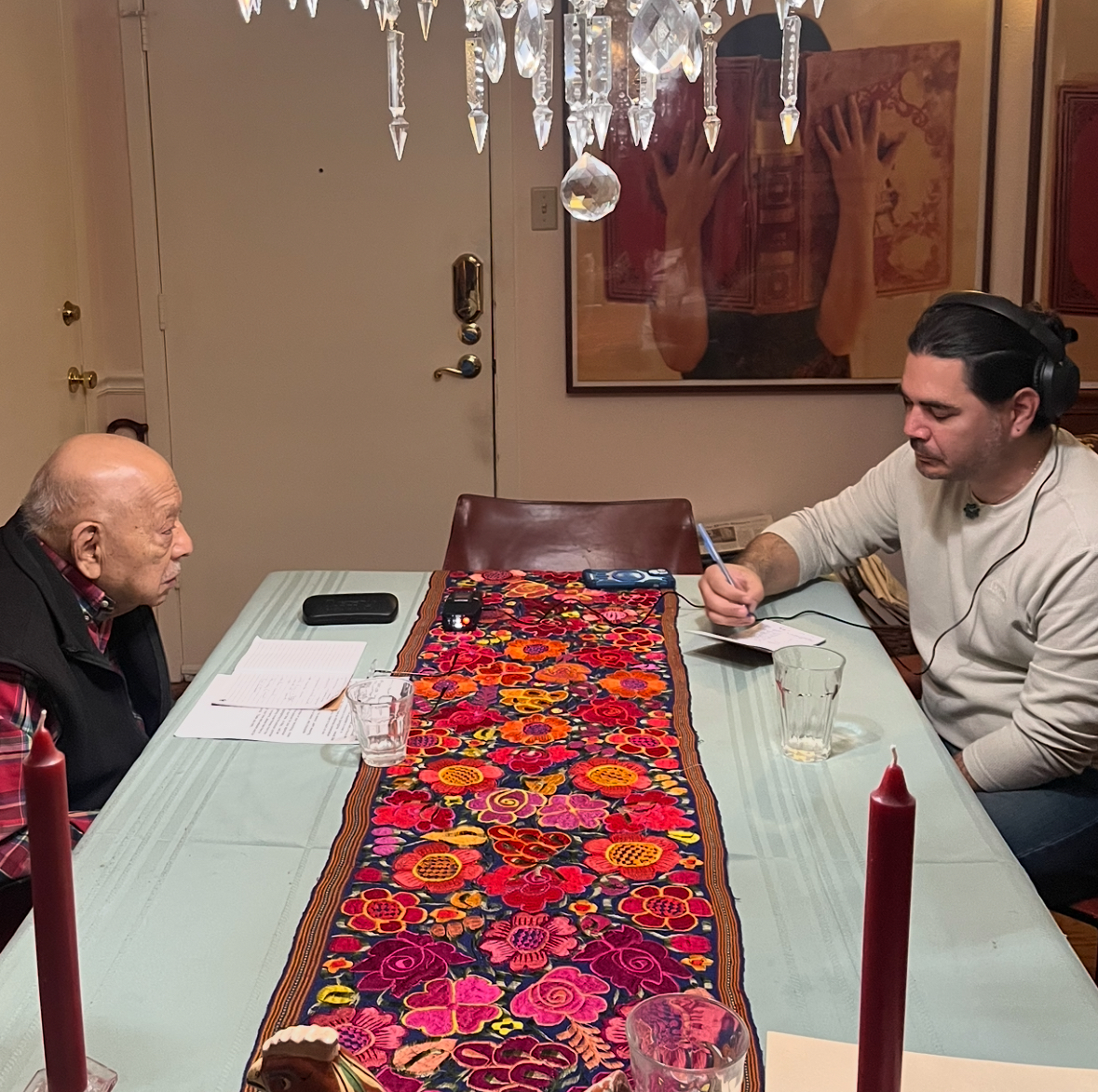
In my research for my Texas Folklife Deep in the Heart podcast episode, I spent time with Dr. Tomas Ybarra-Frausto, Chicano Scholar and Capitana Helga Garza of Grupo Coatlicue both of whom came with years of wisdom, experience and practice. As we talked about the traditions of Spring time Don Tomas recalled ways Easter in San Antonio connected with the land, from gathering grasses to make niditos (little nests) out of grass, harvesting quelites (wild edible greens) and remedies of hojas de nuez (pecan leaves) and agua de rosas (rose water). His memories of Spring in San Antonio carry memories of rains, wildflowers and family. Tomás also mentioned this in our interview:
“La Pasqua (Easter) used to be called la pascua florida (the flowery feast), por que eran cuando venia las flores y pascua es una celebracion no mas de la primavera (because the flowers would come and Easter is no more than the celebration of the Spring) it’s the bridging of the flowers with spring, and so flowers are very important. Las flores de papel o reales. (whether of paper or the real ones)”. – Tomás Ybarra-Frausto
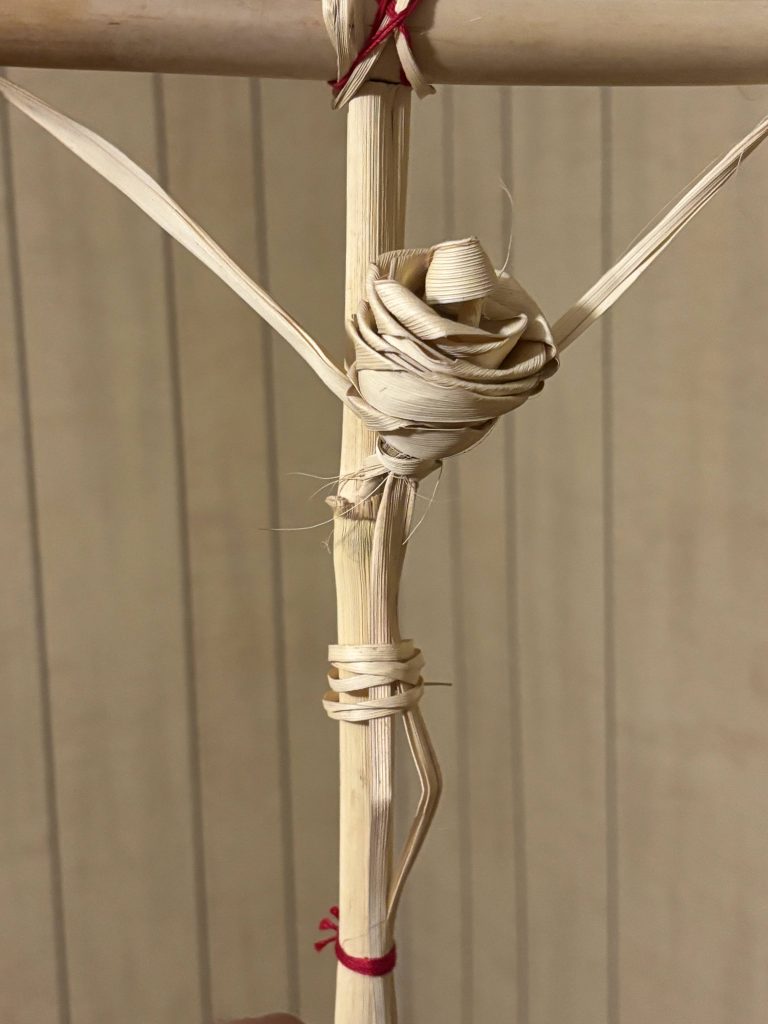
Helga Garza, traditional healer, agricultural organizer and captiana de la danza chichimeca has made art and medicine alongside the ecologies of South Texas for generations alongside her family. In the early 1990s, the Garzas became stewards of the Sabal Palm Sanctuary in Brownsville. The Sabal palm also has a long history in Texas, while the ecology of the Rio Grande Valley has shifted through corporate exploitation of the land and militarization of the waterways, people, animals and plants have long carried the burden of so-called “borders.” The sabal palm itself has long been a resourceful plant to many communities along the Rio Bravo. The Sabal Palm was an important tree used for the construction of roofs for jacales (thatch houses) and ramadas (shaded platforms) that are still used to this day all though becoming an increasingly rare sight in Tejas today. The fronds were also used to make flowers, forms and decorations before commercial tissue and crepe papers were available.
Palm fronds and other natural items were gathered and shaped into decorative and sacred items, being important to both Indigenous and African healing traditions known as limpias. The ecology of the palm forest once massive spread along the Gulf of Mexico, and provided for many communities. Today urbanization and changing climate have jeopardized the ability of the sabal to spread the way it used to. Aside from weavings found during Palm Sunday, many people have stopped connecting with the palm as a resource. As the world continues to shift away from capitalist consumption, we have a real opportunity to reconnect with the seeds, the land and our ancestral skills. In our extended interview audio, Helga shares:
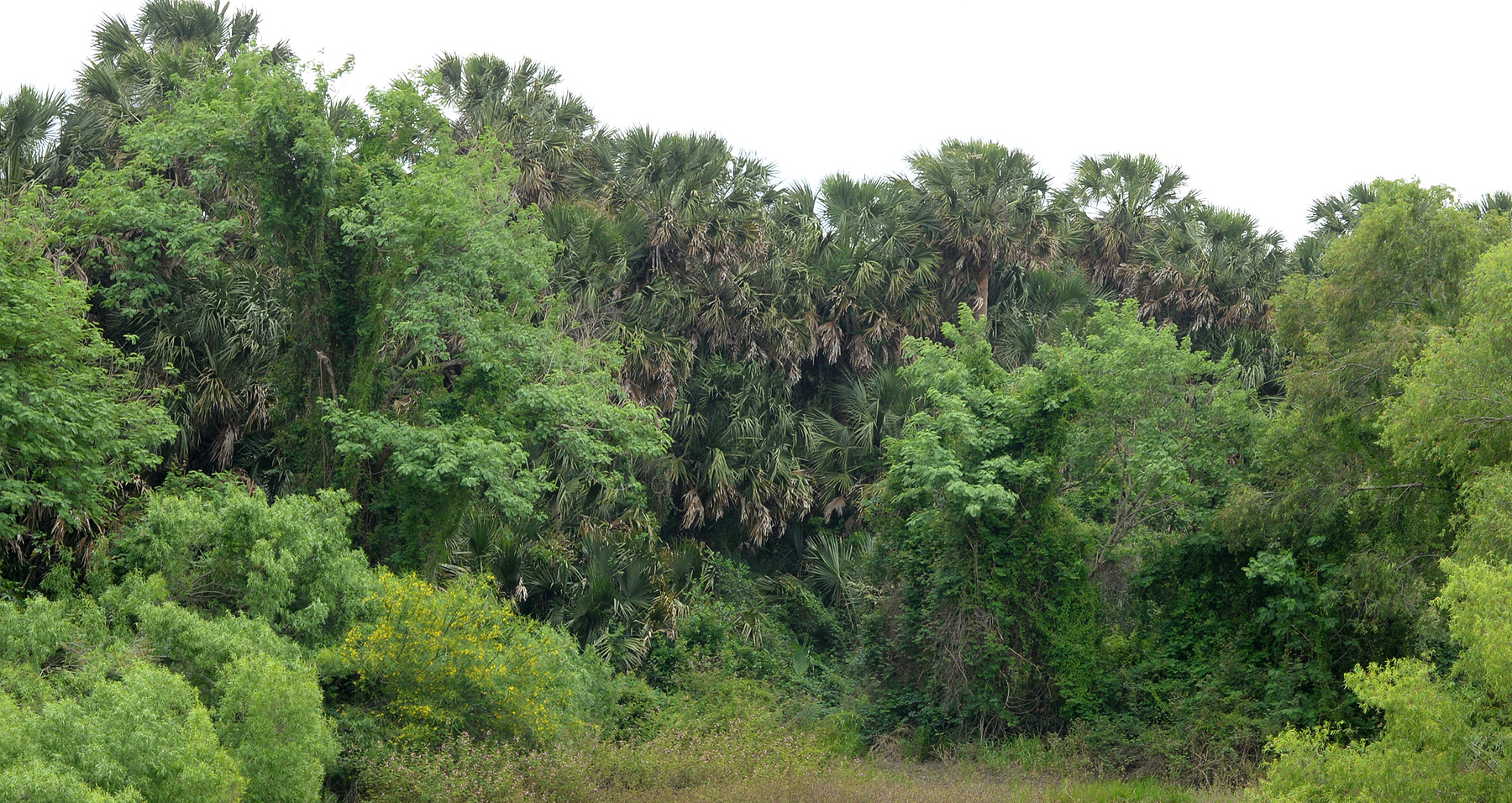
“I think we have to reconnect in that resurgence of understanding. It takes that resurgence of information because we gotta go back and we gotta reconnect and we gotta do all of those other pieces that they tried, everything they could to strip it from us and not make those connections.
So again, it’s up to us and how we do a paradigm shift. And luckily we still have the palma. And we still have the traditional knowledge on sabal and how to use it in healing, ceremonial rites and art forms that continue to connect us with it.” – Helga Garza
Project Reflections
This project was really affirming in the role oral histories shape art and culture. Here in this space, it wasn’t just a “why do we do this” or “this is how you make a petal” it was a journey through time, remembering who we made those flowers with, what the land looked like before extractive industry reshaped the landscapes of our communities. It was also really reaffirming for me as someone who asks a lot of questions to enjoy the answers as well. Even practices that we may see as simple contain their own histories of place, people and inspiration. As I edited my podcast episode, I was amazed at how listening to my elders also helped me time travel inside myself. What did la primavera look like to me as a child? What excitement did I have as a kid for the return of the Sun after (in my case) particularly wet and rainy winters along the Texas Gulf coast? What stories did I wish I had more time to gather from those who have transitioned to the spirit world? This project was a journey to re-member myself and the inspirations that I found in the land.
At a recent workshop reflecting the research I offered in May 2026, my husband and my niece participated. As we crafted flores together, I shared technique and Manuel shared the story of his grandmother and tias. My niece leaned over, “tio, I have never made these before!” she shared excitedly. At that moment I realized that we had now passed the tradition on to her, and she’s made a bunch since. Before the workshop was over she had created several blossoms in different colors with different petal types and shapes. This is the importance of what is being created; connection.
All our traditional skills deserve to be protected and deserve to evolve naturally. As several interviewees expressed, regardless of whether it is flowers, corn husks, palm fibers, sotol or carrizo the important thing is that we continue to practice for the next generation. This project that began in 2021, five years of research and anxiety, all the calming teas and late nights and hot glue burns have landed back in relationship with the land. Cataloguing flowers, documenting growing locations of natural materials, and reflecting on the community this work has built. I am excited to offer the flor y palma workshop again and am excited for the Flor y Palma Zine release in Autumn of 2026. I hope that this work has inspired you to observe the world around you, from your patio to a yard. If you have it, there is a whole universe of pollinators and blooms waiting to be discovered. Find your place in your ecosystem and teach someone something new about your springtime discoveries.
Gratitude & Sources:
xasteyó/gracias/thank you to Texas Folklife, Dr. Jeannelle Ramirez, Lamont Jack Pearley, Dr. Tomás Ybarra-Frausto, Helga Garza, Lupita Dominguez, Manuel Davila, Dora Alicia Gomez, Bonnie Cisnero, Dr. Enrique Madrid
Sources & Suggested Reading:
Tunnell, Curtis & Madrid, Enrique. (1991). “Coronas para los Muertos:The fine art of making paper flowers” (pg. 136) Hecho en Tejas: Texas Mexican Folk Arts & Crafts, edited by Joe S. Graham, 1991, University of North Texas Press
Sombreros, Tascales, Sopladores y Petates
By Ana Paulina Gamez, 1991, México: Fondo Cultural Bancen
The Folk Healer: The Mexican American Traditions of Curanderismo
By Eliseo Torres, 1984, Nieves Press
The Tejano Community 1836 – 1900
By Arnaldo De Leon, 1985, University of New Mexico Press
Research at the UTSA Libraries Special Collections, San Antonio, TX
About Beto De León
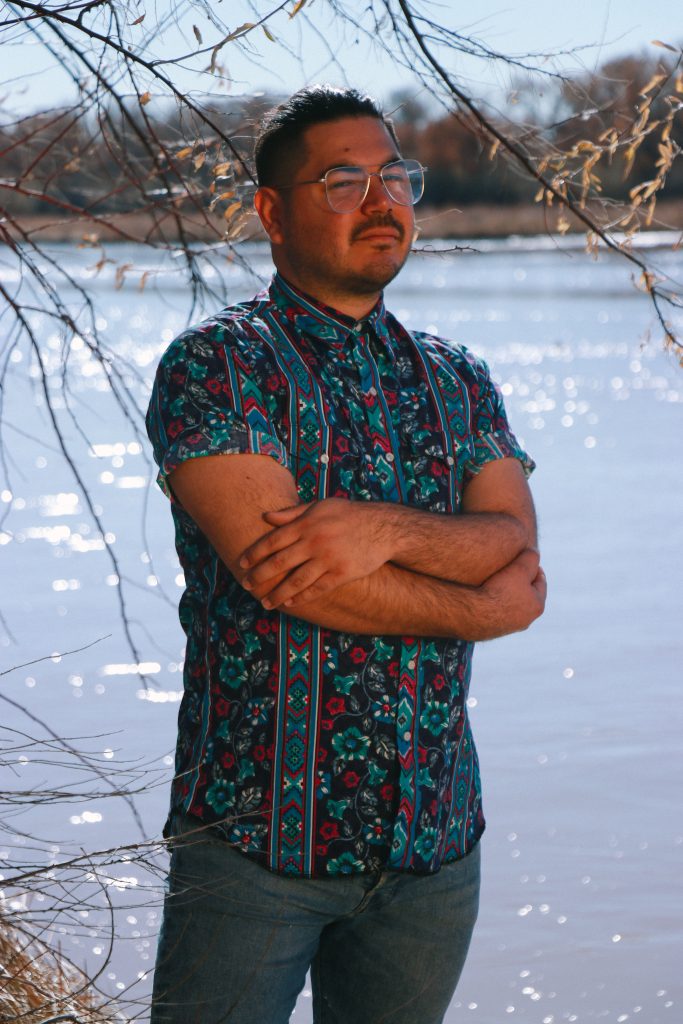
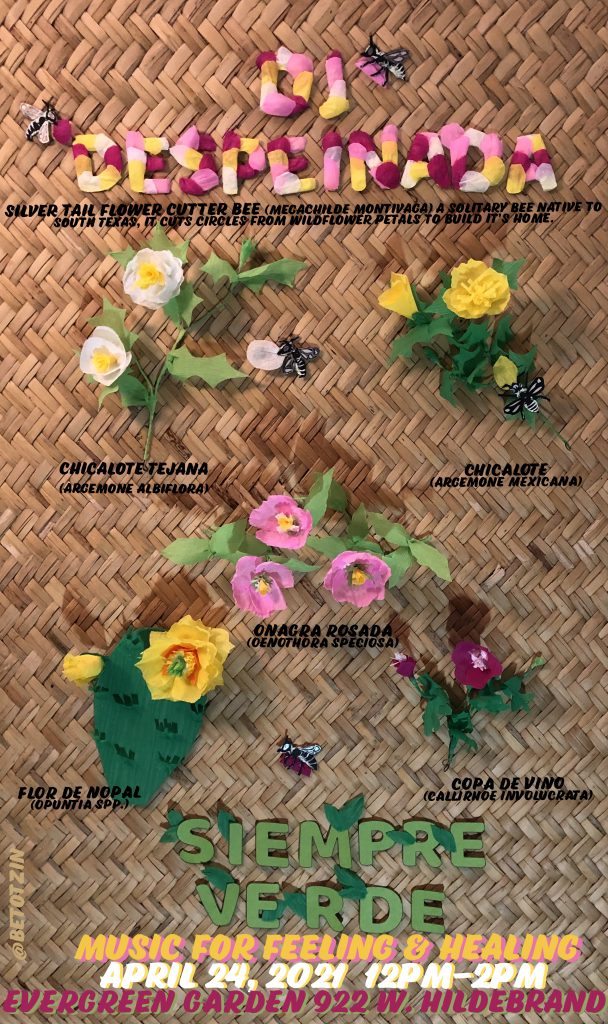
Beto De León is an indigequeer herbalist, multidisciplinary artist, and community archivist based in San Antonio, TX. Beto has spent the past 17 years as a community organizer in San Antonio with a focus on environmental justice, traditional agriculture and protecting our natural water sources. Beto’s inspiration in traditional agriculture and ecology have helped create multiple community learning spaces and skill shares highlighting traditional food, medicine, art and sustainability in South Texas.
Their work has been expressed through site specific gatherings, community organizing spaces, zines,art installations and through their medicine making. Their plant, food and herbal learning has spanned over 25 years of study including multiple curated spaces locally and as a guest speaker in other communities. Their work is rooted in a desire to preserve ecological wisdom in south Texas through community building, connection and creativity.

![[Laura Yohualtlahuiz] wears an elaborate Mexica danza headdress with long feathers radiating outward in orange, red, and pink alongside brown-and-white patterned feathers. A beaded headband with colorful floral and geometric designs frames her face, which is marked with red linear face paint. She wears a gold septum ring and shell earrings, with a tattoo visible on one arm and a green and yellow patterned top. Warm lights glow in the background.](https://texasfolklife.org/wp-content/uploads/2026/08/Laura_Atlachinolli-614x346.jpg)