The Sound of Community: Puerto Rican Plena in Texas

The Sound of Community: Puerto Rican Plena in Texas
by Adam Rosario, Texas Folklife Community Folklife Fellow
The purpose of this project is to document Puerto Rican plena music as it is currently practiced in Texas and to highlight how it is connecting Puerto Rican communities throughout the state. My intention was to produce a documentary podcast “feature cut” centered on personal accounts that succinctly introduces plena and inspires further inquiry into the subject.
As an Austin-based musician who performs and teaches Puerto Rican folkloric music, I joined Texas Folklife’s Community Folklife Fellowship to learn how to document these traditions as they are practiced in Texas. I decided to focus on Puerto Rican plena because it’s both traditional and popular, which means it’s constantly adapting and evolving. A 120-year-old folk tradition with working-class roots, plena’s origins are not well-documented, and there are conflicting oral accounts. I believe documenting its continuing development in an accessible podcast format that captures multiple primary source perspectives can help to reduce the spread of biased or misinterpreted information.
The primary sources in this case are practicing pleneros (plena musicians) from throughout the state of Texas, all of whom perform with professional plena groups in their respective communities. The individuals interviewed for the podcast were Héctor Matos Miranda (formerly of Los Pleneros de la H in Houston), Enrique “Quique Lares” Quiñones Arocho (Los Pleneros de la 100×35 in DFW), Danny Rodríguez and Joaquín Hernández (Los Pleneros Ta’mo Akí in San Antonio), and Leonard Vázquez (En Plena Fiesta in Killeen).
About Plena
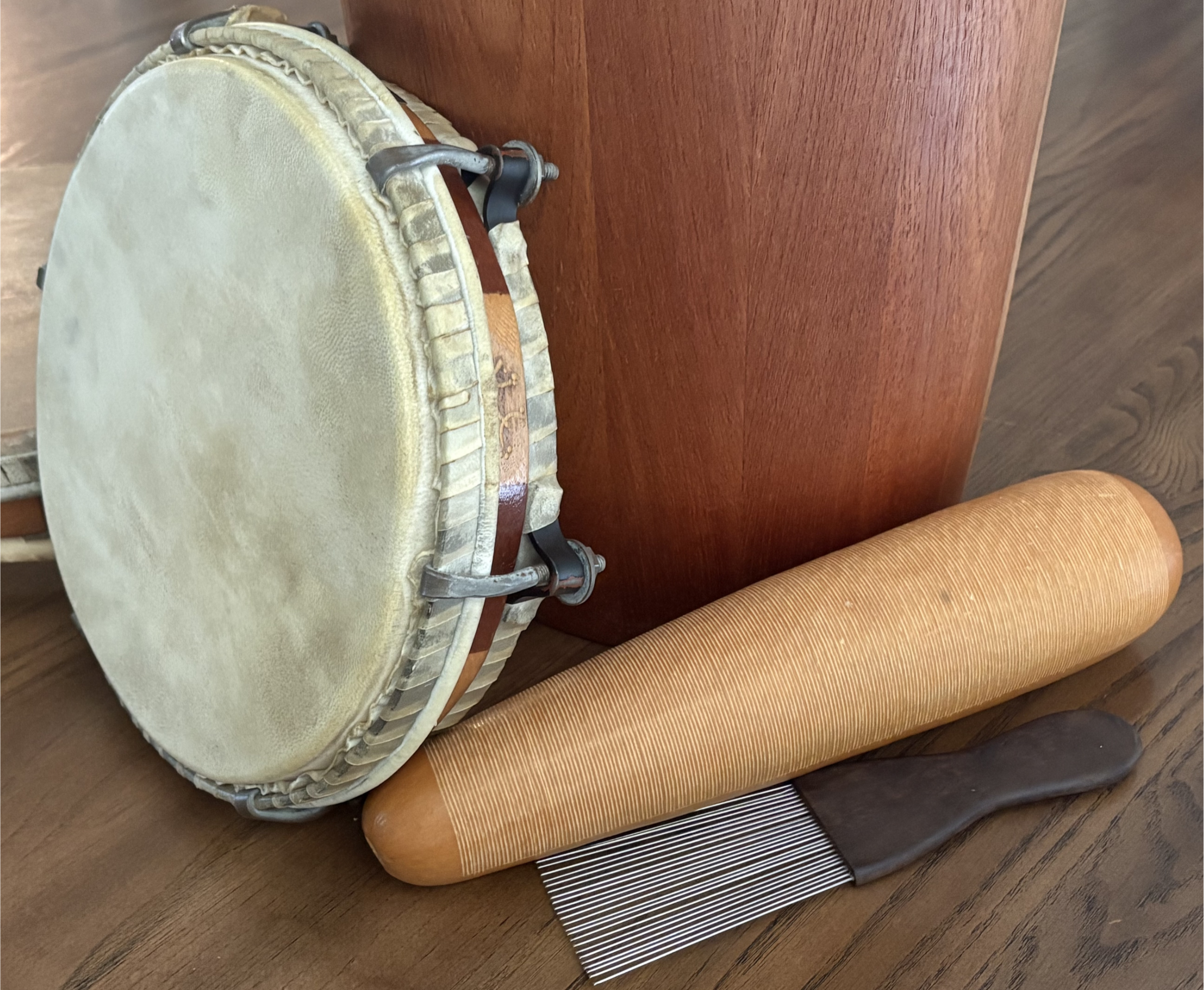
Plena is a Puerto Rican folkloric genre of music known as “el periódico del pueblo” (the newspaper of the people) for its lyrical content, which chronicles significant events from the perspective of the lyricist and covers topics ranging from national to local to personal. Musically, plena is defined by its rhythmic pattern, created with hand-held frame drums (panderetas or panderos), and a scratch gourd (güícharo or güiro). Though a few variants and styles exist, contemporary plena typically features three panderetas; the seguidor (low-pitch) and punteador (mid-pitch) create a call-and-response ostinato over which the requinto (high-pitch) improvises.
Three of the five pleneros interviewed referred to two different approaches to performing plena: “concert” and “comparsa” styles. The concert style is typically performed on a stage, with amplified vocals and instruments. In addition to panderetas and güiro, instrumentation often includes electric bass, keyboard, congas, timbales, and a robust horn section, and its repertoire consists of complex, well-rehearsed arrangements. In contrast, the comparsa style is highly improvisational and usually played in the street or less formal gatherings. Comparsa-style instrumentation is mostly acoustic, sometimes adding one or two melodic instruments to complement the vocals and traditional percussion. While both styles are commonly practiced in Puerto Rico, Texas-based Puerto Ricans seem to have a preference.
Plena in Texas
The informal, participatory nature of comparsa-style plena facilitates social engagement – something Puerto Ricans in Texas are yearning for. This is evident in the style and repertoire of professional plena groups throughout the state; well-known songs with simple choruses are obligatory, and crowd participation is encouraged. Of the four plena groups previously mentioned, three perform comparsa-style plena exclusively, while the fourth tailors its configuration to specific events.
Another distinction is the demographic makeup of pleneros in Texas – while audiences are diverse, the musicians are not. Our interviewees and nearly all their bandmates are middle-aged men born and raised in Puerto Rico. Héctor Matos Miranda, 37, noted that most plena practitioners he saw growing up in Santurce, Puerto Rico, were also men, but this has changed. Today it’s common to see women performing at plenazos (open plena jam sessions) on the island, which, according to Héctor, “only means the plena is going to get richer, because now we have another point of view.” There are now all-female plena groups in Puerto Rico (Plena Combativa), Chicago (Las Bompleneras), and DC/Maryland/Virginia (Madre Tierra).
In Puerto Rico, plena is more accessible than ever before, thanks to the efforts of the late maestro Tito Matos and the plenazo callejero movement he initiated in the early 2000s, the current generation of maestros openly teaching and hosting plena workshops, and online resources such as Plena Brava on YouTube, which is essentially an archive of over 4,500 bomba and plena videos recorded live and compiled over the last 13 years. Puerto Rican youth across the island are now embracing and elevating the art form, in the coastal urban centers of its origin, as well as the rural mountain towns.
When asked about demographic diversity among plena practitioners in Texas compared with Puerto Rico, Leonard Vázquez noted a lack of participation by young people, emphasizing the need to organize plena workshops here. He stated with certainty that there are “a lot of people that want to learn… but they don’t have someone to teach them.” Enrique Quiñones Arocho remarked that, being in Texas, there is potential to expand the plena community to include non-Puerto Ricans, citing recently established plena groups in Argentina and Uruguay as examples. Personally, I wholeheartedly support the idea of home-growing our own plena practitioners in Texas and sharing with all who want to take part, provided it’s done in a way that respects the integrity of the art form and the elders who shared it with us.
The Podcast
My primary intent for this podcast episode is not only to inform but to generate interest, and tailoring the content for the average attention span was a challenge. Transcribing over five hours of raw audio from five separate interviews and skimming through the transcriptions to determine how to shape them into a coherent story was certainly tedious, but the most difficult part of the process was deciding what to cut. In my opinion, every anecdote captured is a relevant and valuable oral history that deserves to be shared, and plena enthusiasts would eagerly take the time to listen to each interview in its entirety, but plena enthusiasts aren’t the target audience in this case. In the end, it was suggested that I create two different edits: a 30-minute “feature cut” for general audiences, and a comprehensive “director’s cut” for those interested in hearing the full interviews.
The interview process itself was less of a challenge, but there was a learning curve. Fortunately, most of the interviewees were outgoing and talkative, only needing occasional redirection to cover the material I was seeking. The first interview, however, was a bit rough. When the interviewee had little to say about a given topic, I instinctively started asking leading questions, which made his responses seem forced and led him to clam up. After ditching my list of prompts and allowing the conversation to develop naturally, he opened up, and the stories began to flow. With each interview, I became more comfortable with the process of assessing individuals and tailoring my approach to match their distinct personalities.
Ultimately, the interviews didn’t yield the information needed to tell the story of plena in Texas as I’d originally envisioned it, because my initial concept didn’t quite align with reality. I assumed that because plena is continuously evolving, geographic isolation would result in regional differences over time – something I’d planned to highlight in the podcast. My discussions with plena practitioners in Houston, DFW, San Antonio, and Austin indicate the opposite – plena styles are merging. Pleneros from Santurce, Arecibo, Juana Díaz – different regions of Puerto Rico – now spread across the state of Texas are routinely traveling hundreds of miles to assemble and make music together. It became apparent that the story of plena in Texas isn’t about regional differences; it’s about connecting communities across vast distances (if this piques your interest, I encourage you to listen to the podcast).
The Workshop
One of the final requirements of this fellowship program was to host a workshop presenting our community tradition, which tied in beautifully. Our interviewees traveled from Houston, DFW, and San Antonio to Austin to facilitate a plena percussion workshop in which participants learned about the instruments and how to play them, with a brief overview of plena history.
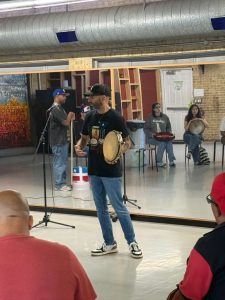
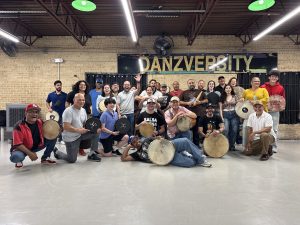
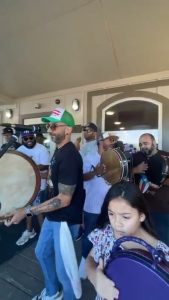
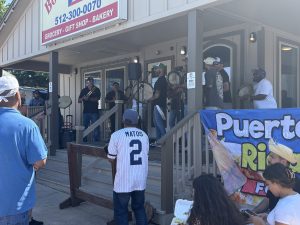
The workshop was followed by an impromptu plenazo at a local Puerto Rican grocery store that lasted for several hours. The pleneros are now planning the next workshop/plenazo to take place in Austin next month, and another in DFW this fall.
About Adam Rosario
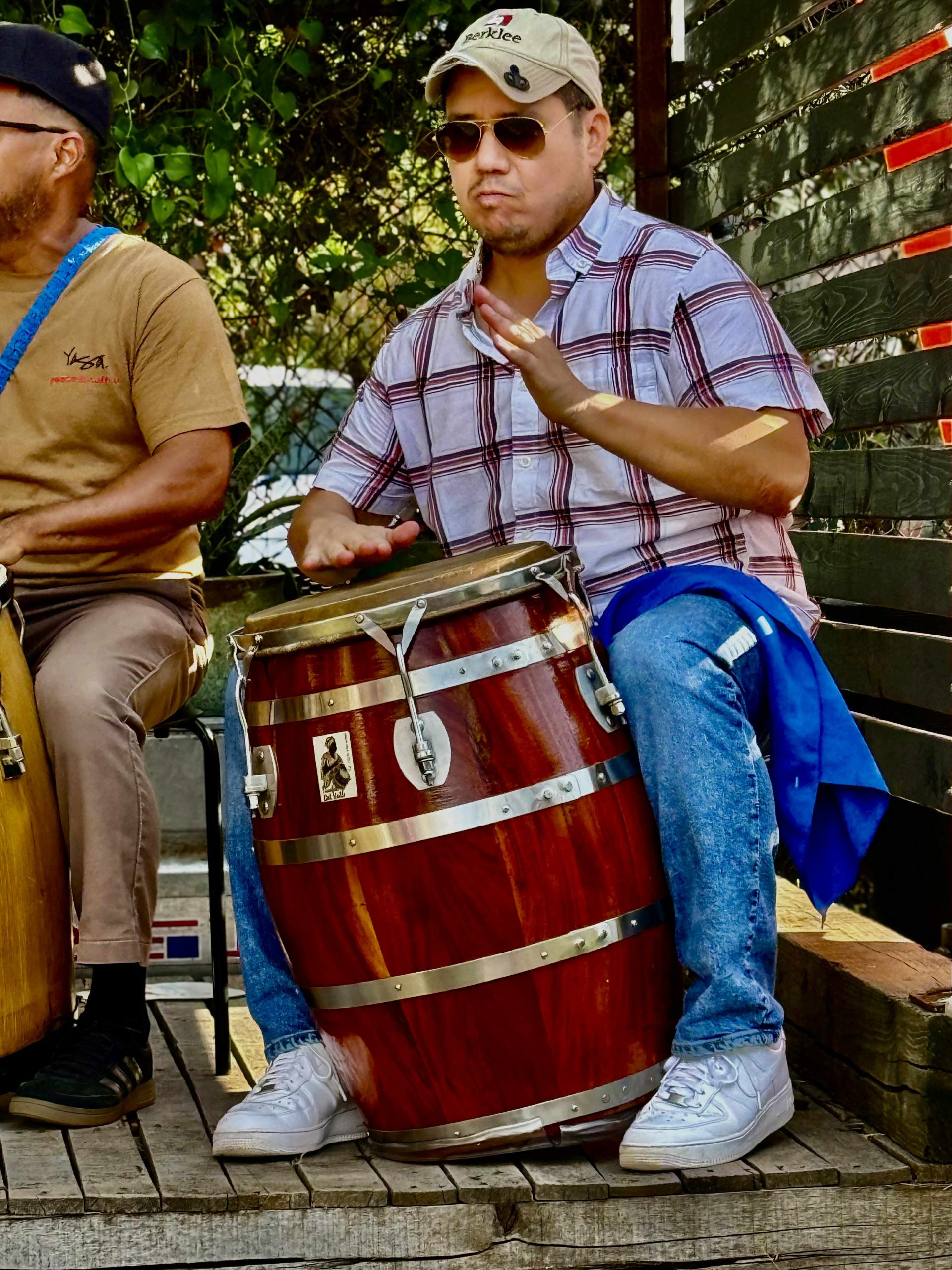
Adam Rosario is a music therapist (MT-BC), percussionist, and retired US Army infantryman based in Austin, Texas. A lifelong student of Puerto Rican folkloric music, he has shared these traditions with Central Texas communities through performance and education for nearly two decades.