
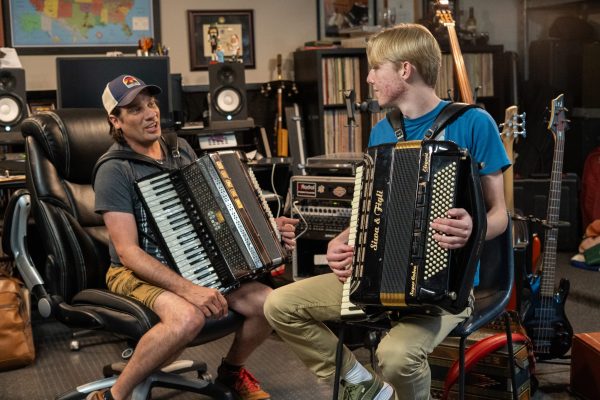
Keeping Texas’s living traditions alive.
Each year, Texas Folklife supports art forms that might otherwise be lost—preserving and celebrating the cultural richness of communities across Texas. Whether a tradition is uniquely Texan or carried here through diaspora from cultures around the world, we support it, so long as it’s practiced in Texas.
The program awards honorariums to roughly eight master artists each year, giving them the means to offer one-on-one training in an artistic, cultural, or heritage practice to a dedicated apprentice over six to eight months.
By deepening mentors’ mastery, broadening apprentices’ skills, and passing knowledge within and between communities, the Apprenticeship Program carries Texas’s folk and traditional arts into the next generation.
This program is funded in part by the Texas Commission on the Arts.
2026 Apprenticeship Program
Mexican Cartonería Sculpture
Waco
Mentor: Rocio Ramirez-Landoll
Apprentice: Zazil Pacheco
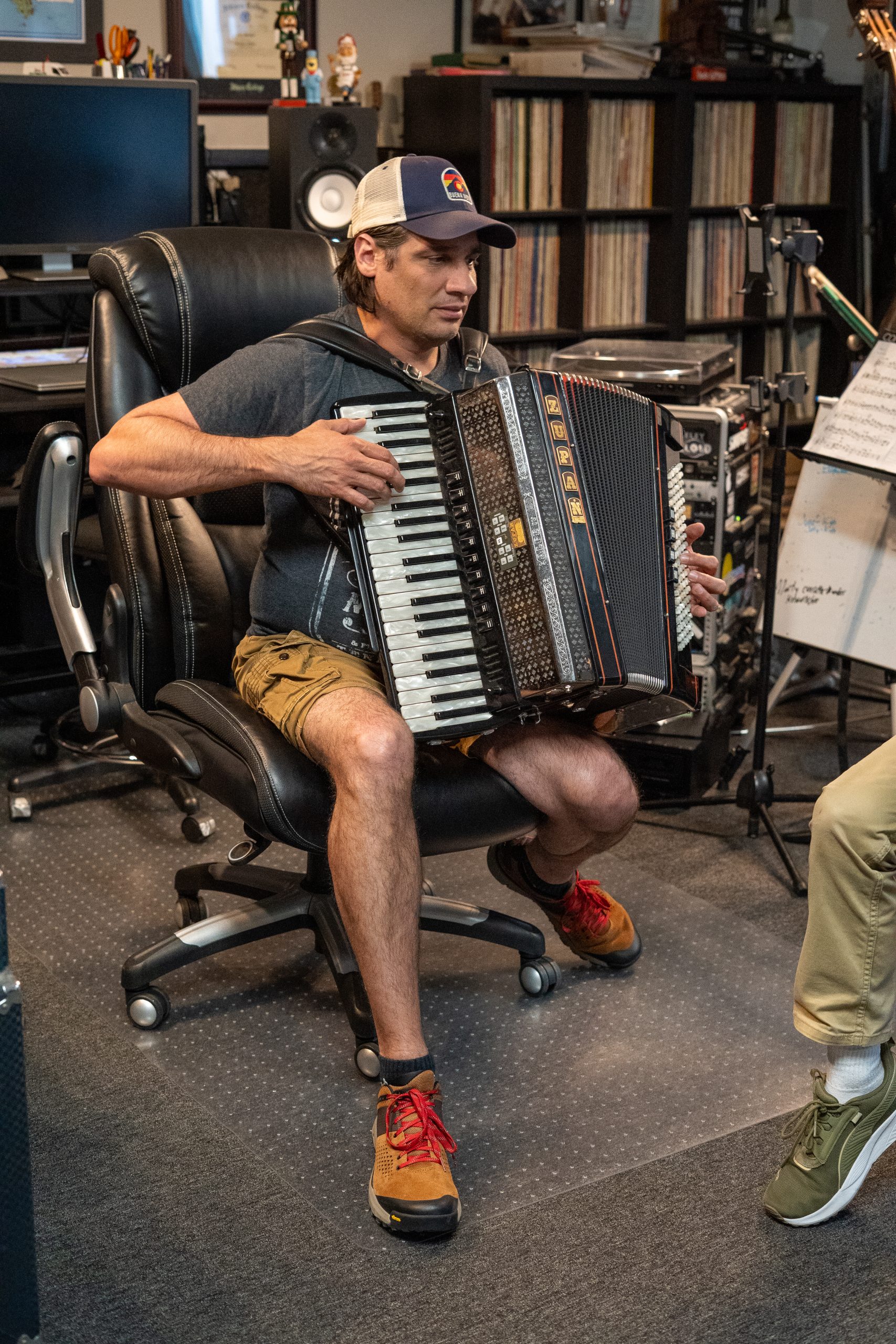
German Texan Polka Accordion
New Braunfels
Mentor: Alex Meixner
Apprentice: Levi Burroughs
Colombian Bullerengue Music & Dance
Austin
Mentor: Beatriz Lopez
Apprentice: Paola Ward
Spanish Flamenco Dance
San Antonio / RGV
Mentor: Genevieve Obregón
Apprentice: Matthew Guerra
Afro–Puerto Rican Bomba
Austin
Mentor: George Rosario Demers
Apprentice: Karolina Arocho González
Texas Fiddle
Burleson
Mentor: Joey McKenzie
Apprentice: Michael Tarpley
Conjunto Accordion
Los Fresnos
Mentor: Juan Longoria
Apprentice: Ulises Ulloa
For more information, please contact:
Jeannelle Ramirez at JRamirez@texasfolklife.org
or Texas Folklife at (512) 441-9255
This program is made possible in part by the board and members of Texas Folklife and from a State Partnership award from the National Endowment for the Arts, which believes a great nation deserves great art, in partnership with the Texas Commission on the Arts.
- Apprentices must live in Texas.
- Artist mentors may live in Texas or a neighboring state: Louisiana, New Mexico, Oklahoma, or Arkansas.
- No age requirements for apprentices or artist mentors.
- Previous participants: If you participated in the 2025 Texas Folklife Apprenticeship Program, you must wait one year before applying again.
- Re-creations of historic artifacts or staged productions that attempt to reenact lifestyles from the distant past.
- Contemporary, individual studio art projects.
- Ongoing classes in a classroom setting (mentor as instructor for a group).
- International apprenticeships.
Artistic Quality and Commitment (60 points)
- Artistic strength of the mentor’s work, based on the standards of the traditional community.
- Apprentice’s established skill and demonstrated commitment.
Feasibility (15 points)
- Clear and achievable work plan.
- Appropriate budget.
- Strong potential for a successful mentor-apprentice collaboration.
Impact (25 points)
- Role and significance of the tradition in community life.
Apprentices should have some experience in the tradition and be ready to deepen their skills through focused, hands-on learning. This program supports skill-building and continuity of living traditions through mentorship.
If selected, participants must submit a W-9 tax form.
Awards will be distributed over three payments: the first at the signing of contracts, the second upon completion of the Program Coordinator’s meeting with the artist team and documentation of the apprenticeship, and the third upon submission of the final report to Texas Folklife following the public presentation.


Past Apprenticeship Projects: Artisanal Fishing Lures, Bomba, Boot Making, Cartonería, Colombian Bullerengue Music & Dance, Conjunto Accordion, Flamenco, Hindustani Sitar, Indian Classical Dance, Indigenous Storytelling, Polka Accordion, Qawwali, Texan Swing Guitar, Trail Riding.
Texas Folklife’s Apprenticeship Program supports diverse cultural traditions practiced in Texas.
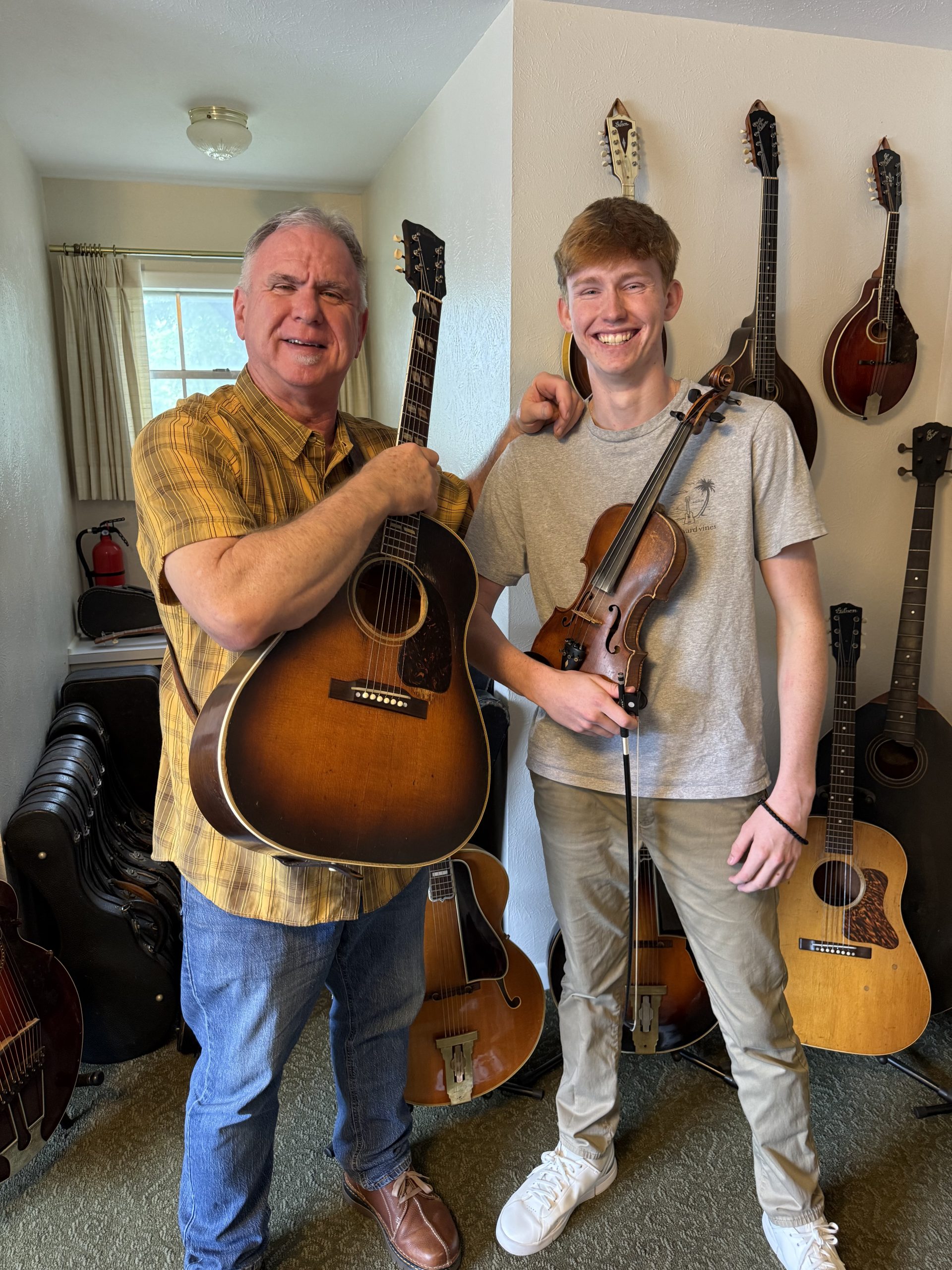
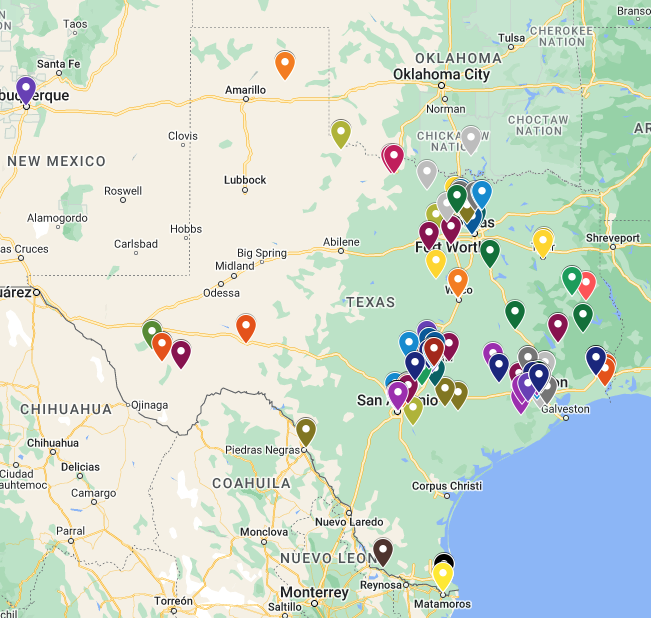
Past Apprenticeship Projects: Artisanal Fishing Lures, Bomba, Boot Making, Cartonería, Colombian Bullerengue Music & Dance, Conjunto Accordion, Flamenco, Hindustani Sitar, Indian Classical Dance, Indigenous Storytelling, Polka Accordion, Qawwali, Texan Swing Guitar, Trail Riding.
Texas Folklife’s Apprenticeship Program supports diverse cultural traditions practiced in Texas.
2025 APPRENTICESHIP PROGRAM COHORT
For more information, please contact:
Jeannelle Ramirez at JRamirez@texasfolklife.org
or Texas Folklife at (512) 441-9255
This program is made possible in part by the board and members of Texas Folklife and from a State Partnership award from the National Endowment for the Arts, which believes a great nation deserves great art, in partnership with the Texas Commission on the Arts.
- Apprentices must live in Texas.
- Artist mentors may live in Texas or a neighboring state: Louisiana, New Mexico, Oklahoma, or Arkansas.
- No age requirements for apprentices or artist mentors.
- Previous participants: If you participated in the 2025 Texas Folklife Apprenticeship Program, you must wait one year before applying again.
- Re-creations of historic artifacts or staged productions that attempt to reenact lifestyles from the distant past.
- Contemporary, individual studio art projects.
- Ongoing classes in a classroom setting (mentor as instructor for a group).
- International apprenticeships.
Artistic Quality and Commitment (60 points)
- Artistic strength of the mentor’s work, based on the standards of the traditional community.
- Apprentice’s established skill and demonstrated commitment.
Feasibility (15 points)
- Clear and achievable work plan.
- Appropriate budget.
- Strong potential for a successful mentor-apprentice collaboration.
Impact (25 points)
- Role and significance of the tradition in community life.
Apprentices should have some experience in the tradition and be ready to deepen their skills through focused, hands-on learning. This program supports skill-building and continuity of living traditions through mentorship.
If selected, participants must submit a W-9 tax form.
Awards will be distributed over three payments: the first at the signing of contracts, the second upon completion of the Program Coordinator’s meeting with the artist team and documentation of the apprenticeship, and the third upon submission of the final report to Texas Folklife following the public presentation.