Pitaya Harvest in the Big Bend Region of Texas: A Family Tradition

Pitaya Harvest in the Big Bend Region of Texas: A Family Tradition
by Dr. Koyana Flotte, Texas Folklife Community Folklife Fellow
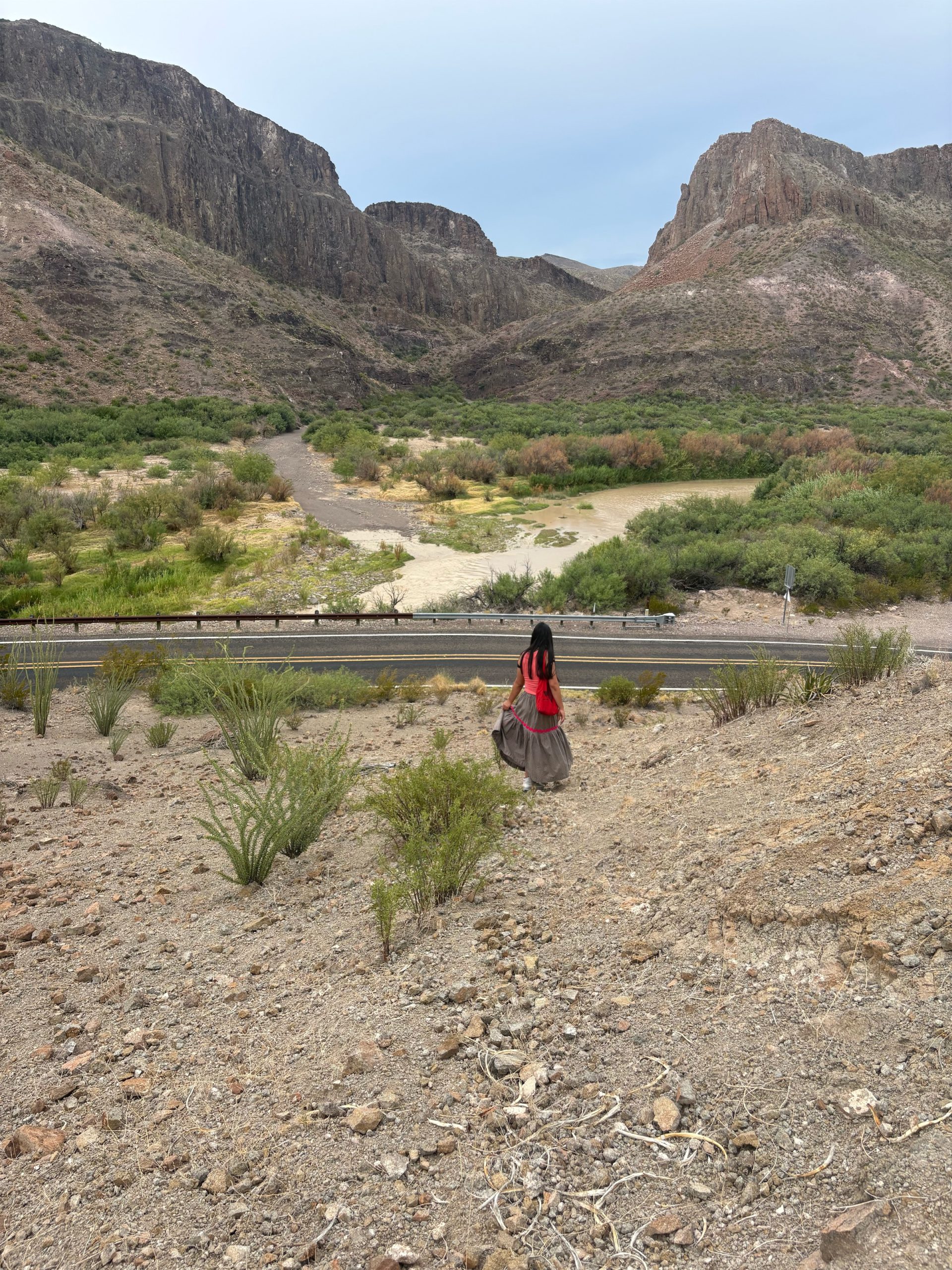
The desert of the Big Bend region is not empty or void of life. In her arms, she holds memories, names, and foods that have become intertwined with the stories and ways of life of the Indigenous Peoples who have lived in these lands for thousands of years.
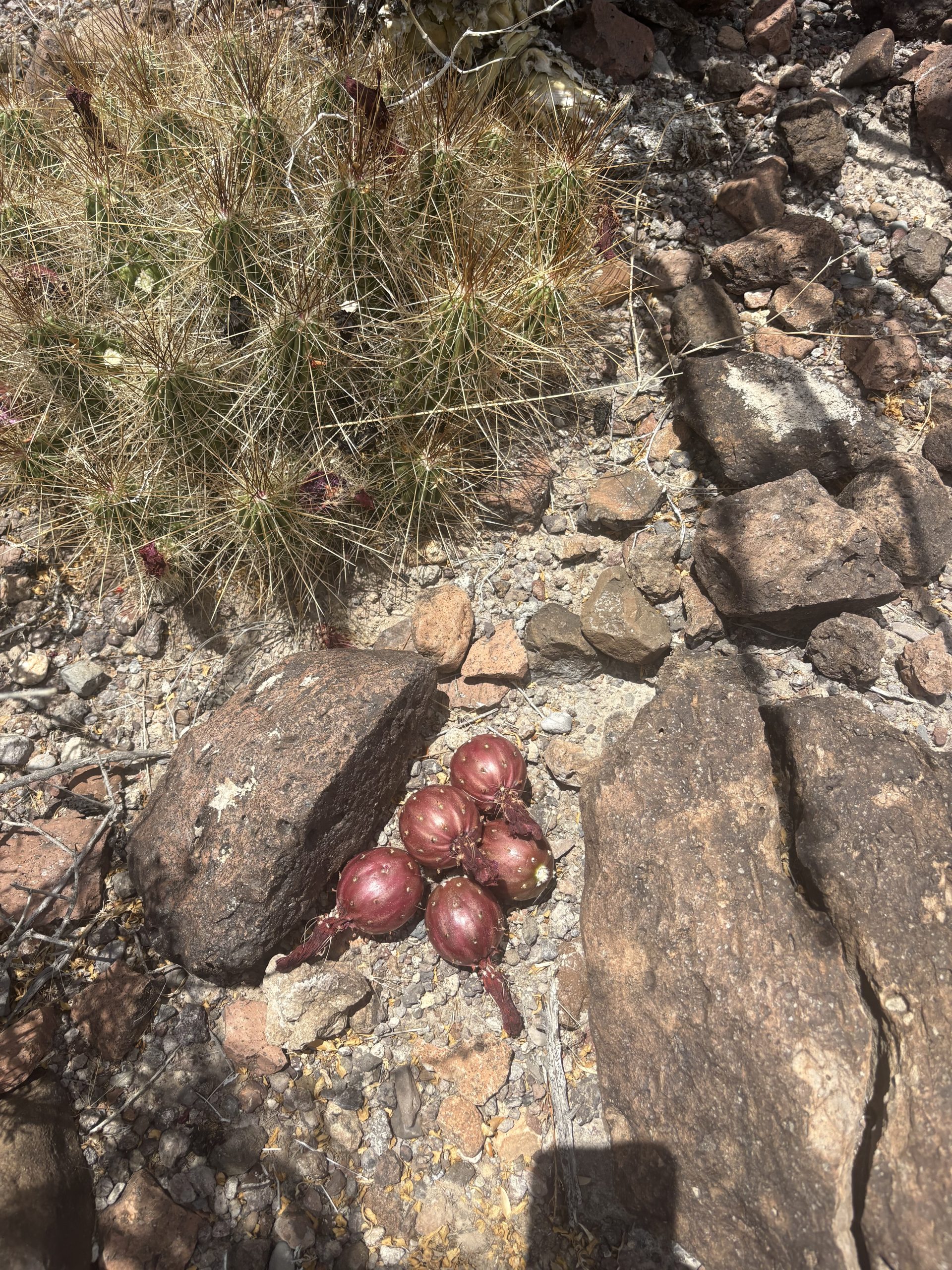
One of these fruits is the pitaya fruit (Echinocereus stramineus), or the strawberry hedgehog cactus, sometimes known by the general public as “dragon fruit.” The fruit grows on a plant commonly referred to in Spanish as bisnaga — barrel cactus — and my family has identified at least four different types of bisnagas in the area for harvest. However, more scientific research is needed to better understand these varieties.
For local Indigenous families and communities on both sides of the border, it is the act of collecting the pitaya that is important. Most will not simply purchase it at the store, as it is the ritual of gathering with family to harvest that gives this tradition and its fruit meaning.
The harvest is about walking and knowing how to read the landscape in order to identify the correct bisnaga plants with care and attention. Through the act of foraging, we remember our elders, who taught us where to go, how to engage with the fruit, and how to take only what we need while leaving the rest for the birds, the pitaya borers, and our four-legged relatives.
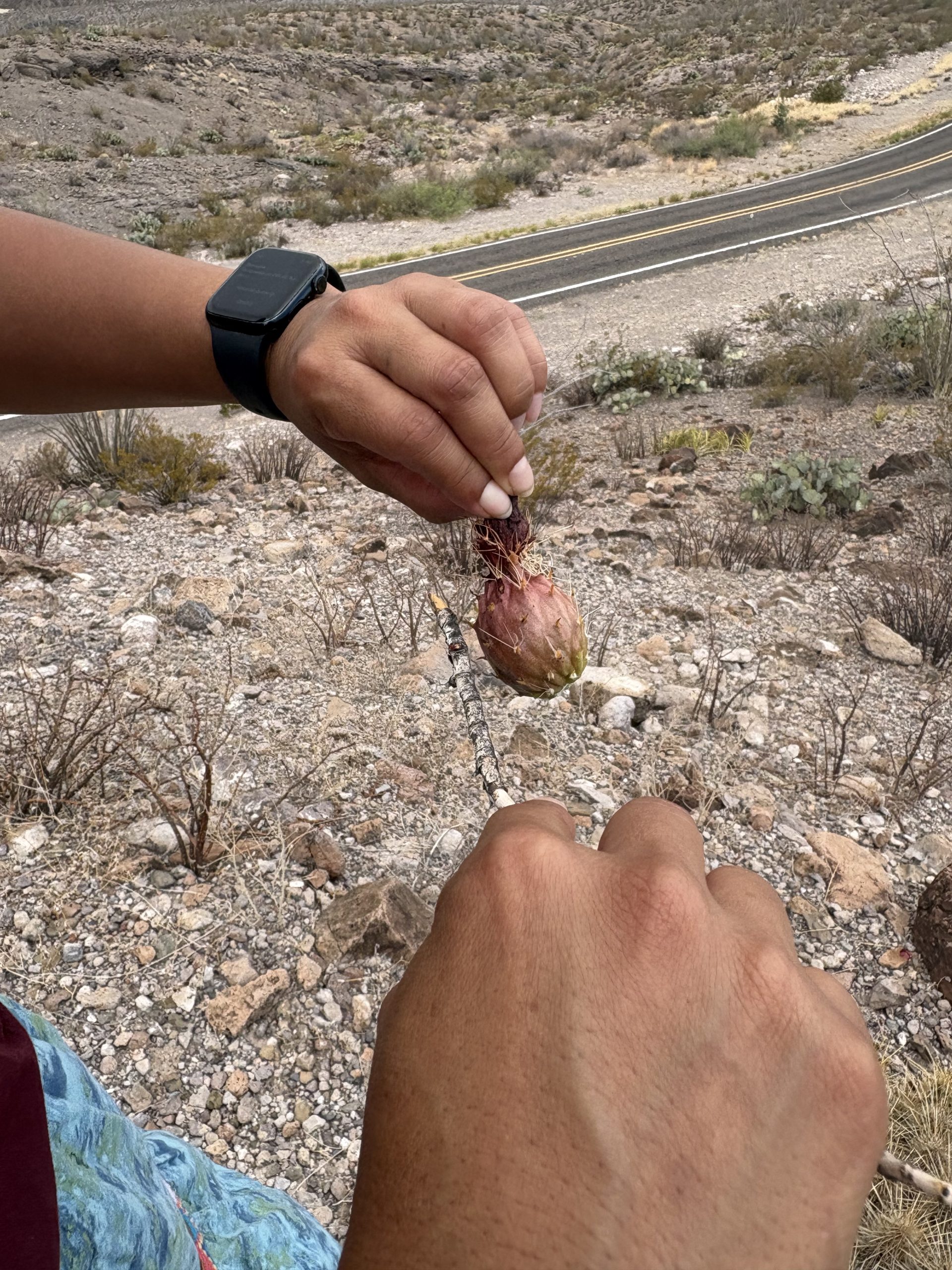
This podcast focuses on the tradition of pitaya collection in La Junta, a community and cultural region shaped by the meeting of rivers, desert, and families on both sides of the U.S.-Mexico border. La Junta de los Ríos — the joining of the rivers — refers to the confluence of the Río Conchos and the Río Grande, near Presidio, Texas, and Ojinaga, Chihuahua, signaling a region that is defined by ancient family relations and traditions and that is not delimited by international borders or “borderlands” thinking.
About Dr. Koyana Flotte

Dr. Koyana Flotte is a scholar, writer, and research consultant based in Central and West Texas. She is from the border region of Ojinaga, Chihuahua, and Presidio, Texas. She is a direct descendant of the Jumano, Julime, Concho, Chiso, and Lipan Apache communities in the Barrio de los Lipanes, and an enrolled member of the Lipan Apache Tribe.
She serves as Senior NAGPRA Coordinator and Visiting Professor in Anthropology/Sociology at the University of Texas at El Paso. Flotte’s work focuses on repatriation, Indigenous rights, environmental stewardship, and community-based research along the U.S.–Mexico border.
![[Laura Yohualtlahuiz] wears an elaborate Mexica danza headdress with long feathers radiating outward in orange, red, and pink alongside brown-and-white patterned feathers. A beaded headband with colorful floral and geometric designs frames her face, which is marked with red linear face paint. She wears a gold septum ring and shell earrings, with a tattoo visible on one arm and a green and yellow patterned top. Warm lights glow in the background.](https://texasfolklife.org/wp-content/uploads/2026/08/Laura_Atlachinolli-150x150.jpg)

![[Laura Yohualtlahuiz] wears an elaborate Mexica danza headdress with long feathers radiating outward in orange, red, and pink alongside brown-and-white patterned feathers. A beaded headband with colorful floral and geometric designs frames her face, which is marked with red linear face paint. She wears a gold septum ring and shell earrings, with a tattoo visible on one arm and a green and yellow patterned top. Warm lights glow in the background.](https://texasfolklife.org/wp-content/uploads/2026/08/Laura_Atlachinolli-614x346.jpg)