Archiving the Ephemeral: the Art of Preserving Dance

Archiving the Ephemeral: the Art of Preserving Dance
by Amber Ortega, Texas Folklife Community Folklife Fellow
San Antonio’s story of contemporary/modern dance is born from dancers and choreographers who actively reshape their cultural dance practice to tell a more relevant story and to make a statement of resistance. Cultural dance practices are not always viewed as contemporary since they generally are thought of as rooted in centuries-long traditions. However, we can look at the following dance practices as examples of cultural forms that are inherently contemporary: Breakin, a cultural dance form within the Hip Hop culture, and Tap, specifically Rhythm Tap, is a cultural dance form within the Jazz Arts family. Both of these cultural dance forms are contemporary in nature due to their reliance on innovation and evolution within their practice and performance.
During my interviews, I recognized a delicate thread of contemporary movement, one that is there due to necessity. This looked like a desire to speak truth, a need to communicate solidarity and kinship. There were changes within cultural dance practices of Ballet Folklorico, Carnival, and other Mexican performing arts such as Charreada and Social Dance. This practice of “contemporarizing” cultural dance forms has a rasquache feeling to me. Rasquache/Rasquachismo is a theory by San Antonio Chicano scholar Dr. Tomás Ybarra-Frausto, which refers to the way that Chicano/es resist and empower themselves and their communities through the act of juxtaposition and hybridization of the materials and tools that are at hand, that are around, for the purposes of constructing something new.
To tell some of these stories of dance culture bearers and the ways they have used their dance practice to create change, I thought it would be interesting to look at artifacts and identify tangible pieces of history and legacy.
My love of history and culture (before switching paths, I studied archaeology and Mesoamerican history) has led me towards an interest in the things that dancers treasure, care-take, and just keep for functional or sentimental reasons. I began thinking that maybe these artifacts could also be thought of as milagritos, tangible little things that we hold onto for hope, good wishes, or because they represent something we still desire to become. They can also be held onto for those who have passed on, to keep them and their stories alive. Being the caretaker of artifacts is an act of preservation, and my current research is concerned with preservation, especially for an art form that is characterized as ephemeral; dance doesn’t leave behind an end product. At the height of its fruition, dance disappears at the same time that it is becoming.
I interviewed five dancers for this project;
Mona Lisa Montgomery
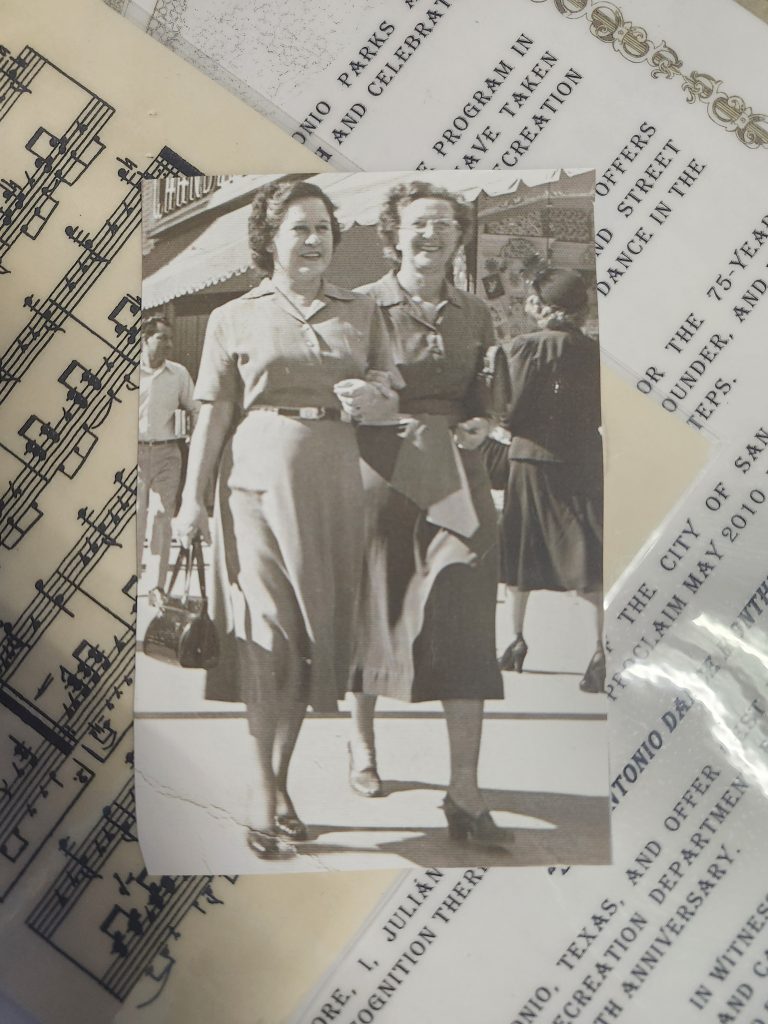
Former director for the San Antonio Parks and Recreation Dance Program and the official historian for the archive of Berta Almaguer. Mon Lisa was key in preserving the city’s municipal dance program, which was started by Almaguer in 1934.
Catherine Cisneros
Contemporary dance artist and choreographer, and founder/director of Urban-15. Catherine is a key member of the San Antonio cultural arts community. Her street Carnival dance company is a medium for her unique soft sculpture work, avant-garde choreography, environmental public performance, and cultural activism.
Sarita Zuñiga
Owner of Sarita’s Dance Studio, has dedicated her career to serving an intergenerational community on the Southside of San Antonio since 1980. Zuñiga is committed to the arts in the barrio and has been teaching health and wellness, Jazz Dance, Modern Dance, Ballet, Rhythm Tap, and Mexican Folklorico at a pre-professional level for four decades.
Georgina Morgan
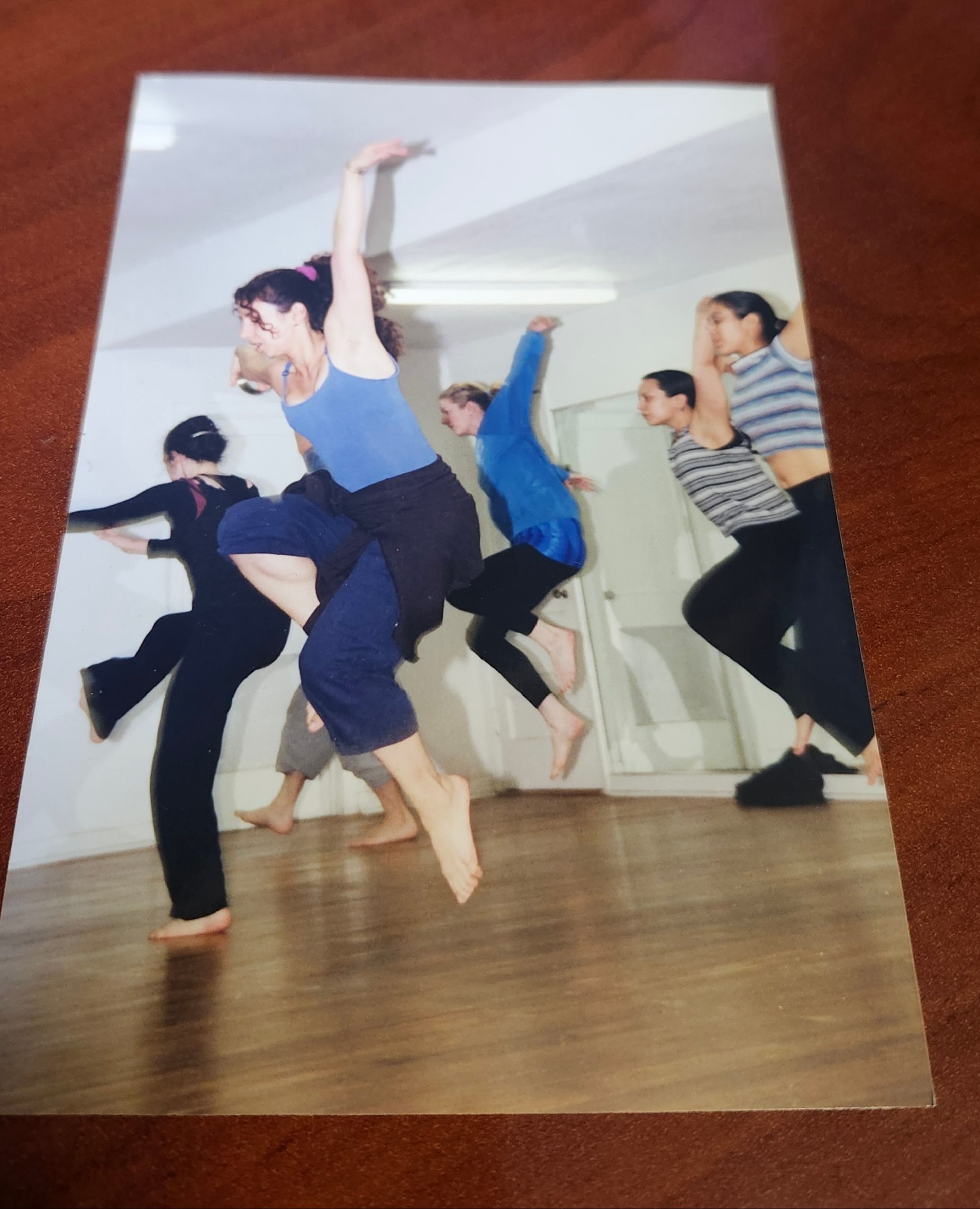
Modern dancer, choreographer, from the late 1990’s to the mid-2000s, Morgan had the only Modern Dance studio and dance company in San Antonio. She served as the Executive Director for the San Antonio Dance Umbrella for some years, taught Modern Dance at various San Antonio colleges, and owned the last Modern Dance studio in San Antonio on record, Treehouse Dance Space, which hosted notable Contemporary Dancers such as Urban Bush Women and Donald Byrd.
Gio Bazaldua
A dance activist, dragtivist, and dance educator, has tirelessly created accessible opportunities for dance and dance instruction. Gio deftly utilizes cultural dance styles to introduce ideas and practices of inclusion, body positivity, human rights, and community solidarity. Currently, Bazaldua directs Los Mentirosos and Zombie Bazaar Pansa Fusion.
Through these interviews, I found a thread of contemporary dance which I knew I wanted to pull on and figure out how to re-weave into the greater story of San Antonio dance. The Modern or Contemporary Dance story in San Antonio, for many, is a short one, however I did find that it is a meaningful story rooted in Latine and Chicano culture, and may actually be quite unique to San Antonio. I want to clarify that modern dance is sometimes used interchangeably with the term contemporary dance, but both connote a dance practice that is new and not rooted in traditional practices. The term Contemporary Dance, for my purposes, specifically refers to dance that is ever evolving and also emergent.
As part of the research I was engaged in for this project, I held a workshop focused on artifacts and the stories they represent in people’s personal lives. The workshop was held on May 2nd at the International Folk Culture Center on the campus of Our Lady of the Lake University. The workshop was built around the sharing of an embodied writing practice utilizing personal artifacts that participants brought to the 3-hour session. Participants were guided through contemplative movement and spatial explorations with and without their artifacts. Each person was able to engage in embodied writing about their artifact after moving and imagining the body as a textured landscape. Stories were shared and it was a beautiful opportunity to engage in movement and non-linear storytelling. I do not have photos of this workshop since the foundation of these workshops are to maintain privacy for those who participate and to foster a space where all feel safe to move and share with anonymity.
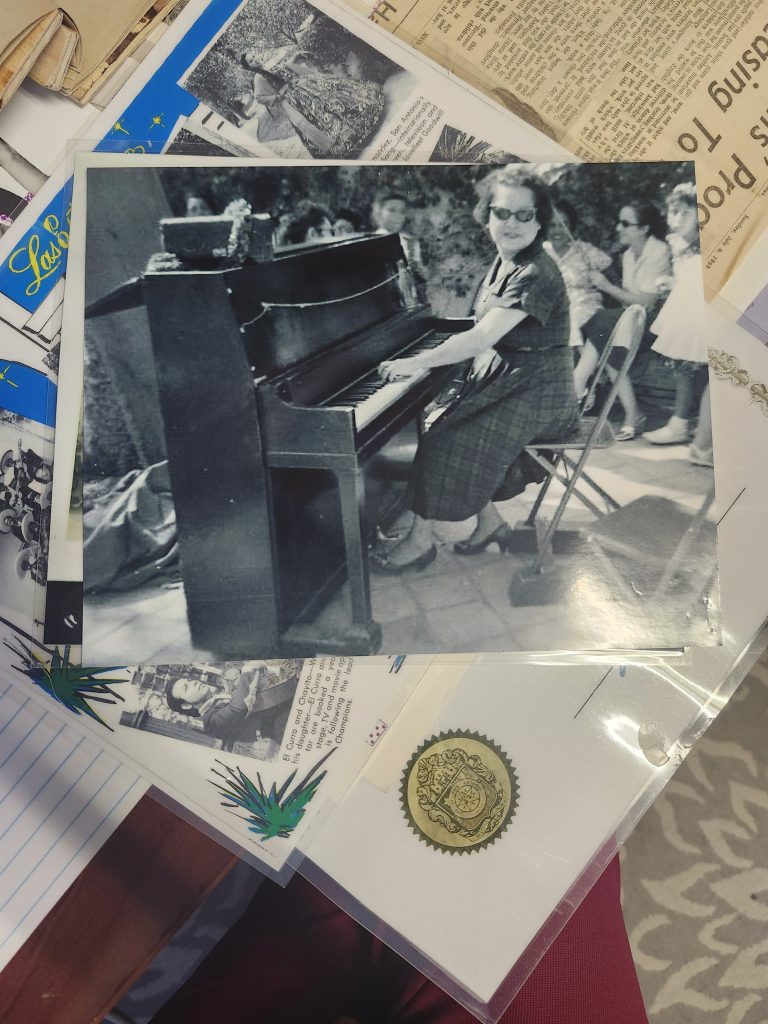
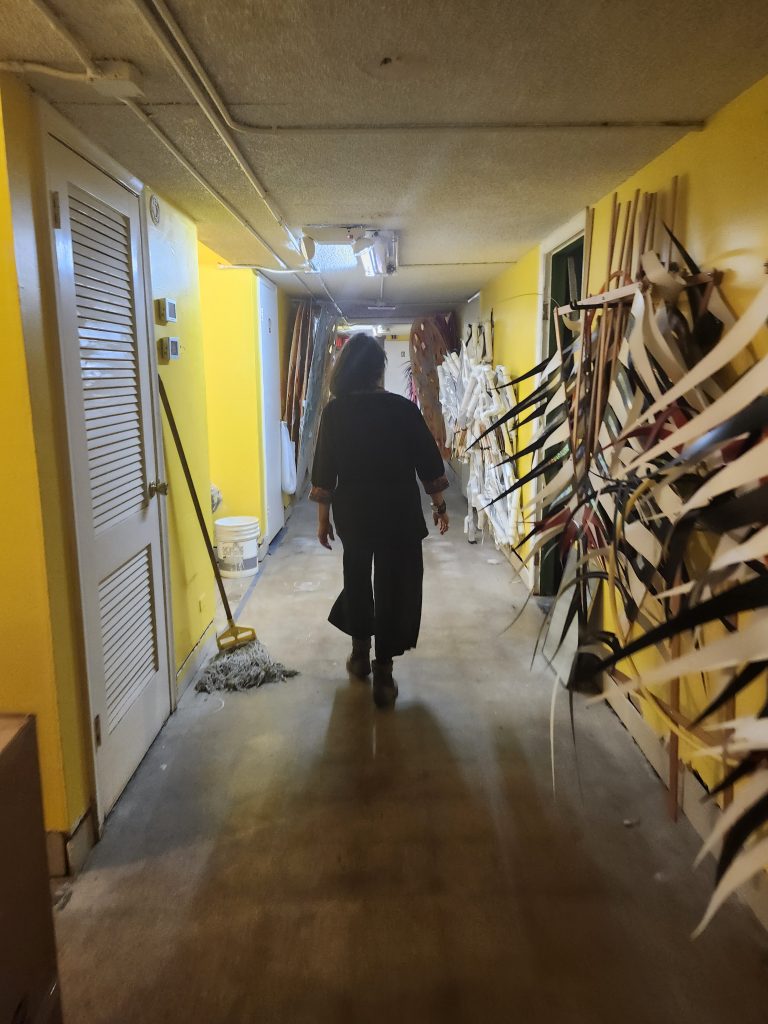
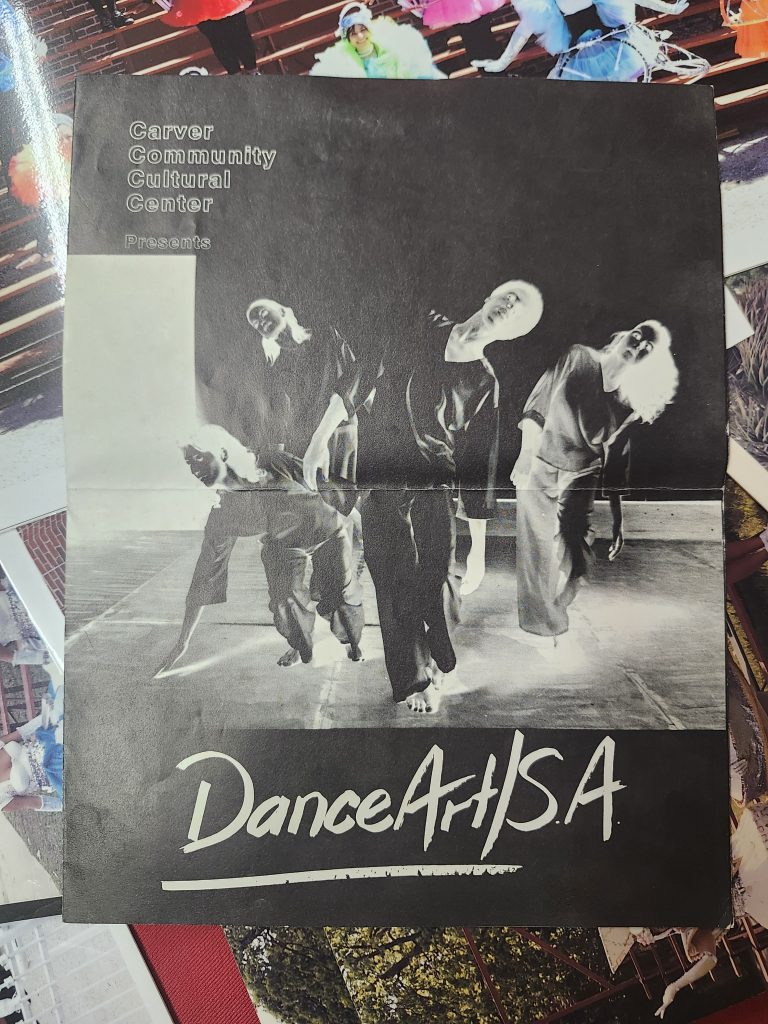
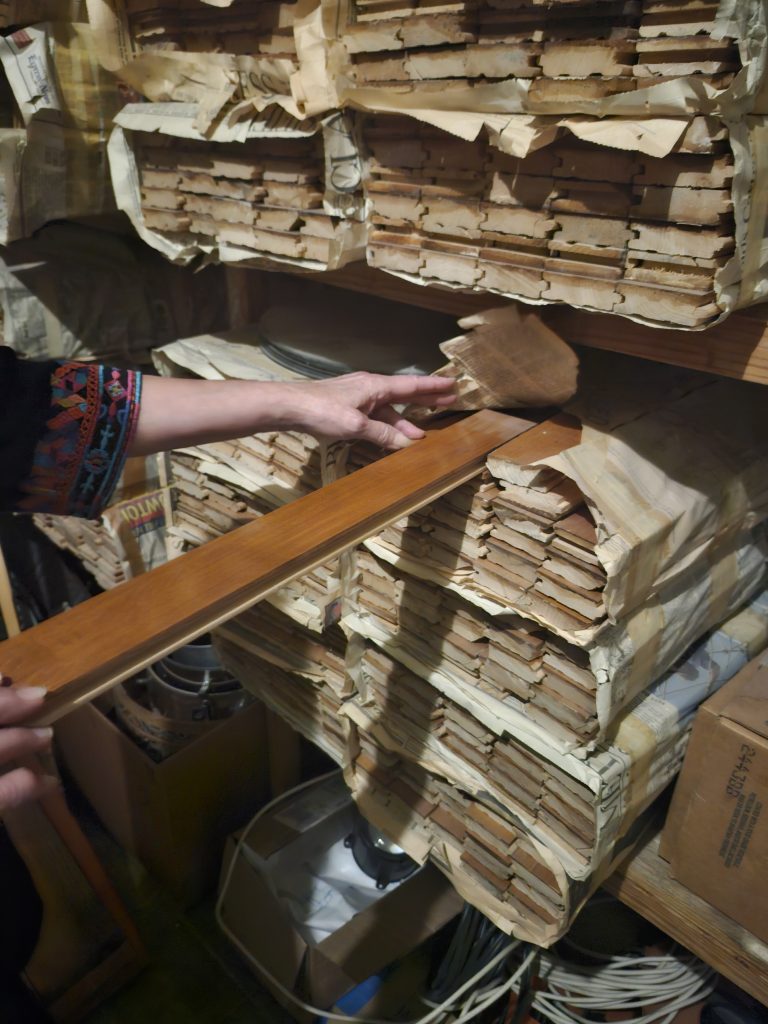
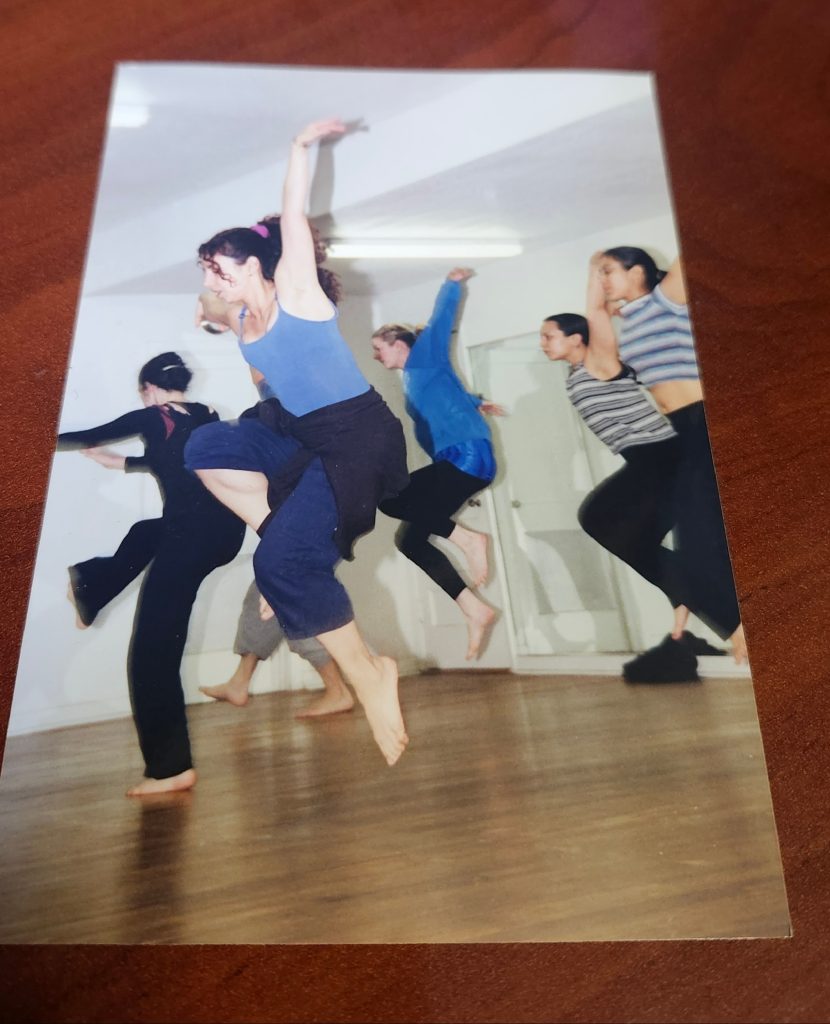
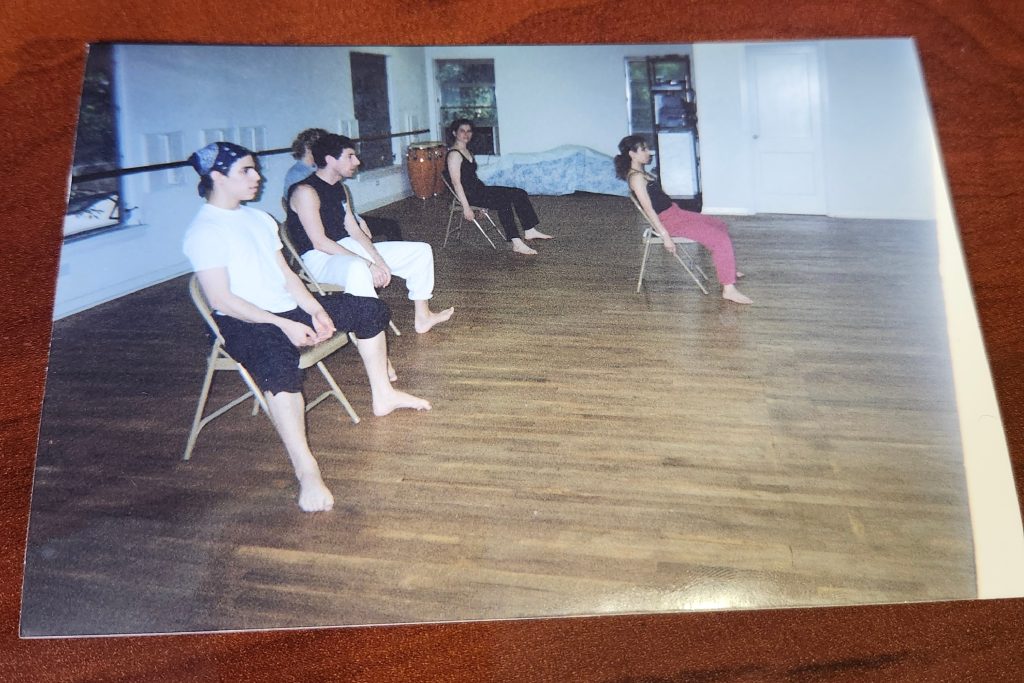
This was a challenging process for me and I am grateful to Jeannelle Ramirez and Texas Folklife for granting me the opportunity to have this experience. I am a dancer and choreographer and for many years I have wanted to dive into the history of dance in San Antonio, specifically to find ways to preserve and archive the story of dance. San Antonio has so much dance history and practice that goes unseen and is rarely recorded for the purposes of preservation or community reflection; we don’t know how valuable Latine dancers and their work have been in shaping the city’s identity.
I want to thank Lamont Jack Pearley for taking the extra time to work through some challenging areas for me in the constructing of a coherent narrative and for helping me tell the story I wanted to tell. I am grateful for this fellowship as it has allowed me to be focused about a dream a few colleagues and I have had for some time, to document and archive San Antonio dance. I have been conducting interviews with dancers and dance culture bearers since 2023. Producing a podcast was one of my goals and the Texas Folklife fellowship program has given me the tools to move forward with documentation, storytelling, and sharing the story of dance culture.
I know there are many more interviews of San Antonio dancers that need to be recorded and it is my goal to add their stories to the greater work of San Antonio dance history and research that others in my field are contributing to. As part of my fellowship, I will be facilitating an embodied writing workshop organized around artifacts that we care for and the stories that we hold from them.
About Podcast
Dance in San Antonio isn’t fully documented, and I’ve always wanted to share the stories of community dance culture bearers who shape our city. This project highlights stories from community dance leaders exploring contemporary and cultural practices as acts of resistance and evolution. Through interviews and artifact preservation, this story honors San Antonio’s dynamic dance culture.
About Amber Ortega
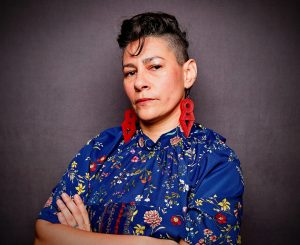
Amber Ortega (MFA, BFA) is a Queer Xicana-Tejana, choreographer, educator, writer, and collaborator, and is the Coordinator for the International Folk Culture Center (IFCC) at Our Lady of the Lake University. Ortega researches embodiment, technology, and the epistemology of dance, and guest lectures offering transdisciplinary approaches from dance perspectives. She explores embodied writing and methodologies of practice for creative writers and movers-who-write. Her research was recently supported by the Croft Residency as the 2024 & 2025 Artist in Residence. Her work, “Mycelium” is included in the anthology, Somos Xicanas, published by Riot of Roses, and OyeDrum, an intersectional feminist magazine. Her hybrid poem, “WATERHEATDREAMPLACE” and “Mycelium” have been nominated for a Pushcart Prize and Best of the Web. Ortega’s work has been presented at the
Association for Jotería Arts, Activism, and Scholarship (AJAAS) in Los Angeles, Society for the Study of Gloria Anzaldua (SSGA) El Mundo Zurdo Conference, and Interference Fest.

![[Laura Yohualtlahuiz] wears an elaborate Mexica danza headdress with long feathers radiating outward in orange, red, and pink alongside brown-and-white patterned feathers. A beaded headband with colorful floral and geometric designs frames her face, which is marked with red linear face paint. She wears a gold septum ring and shell earrings, with a tattoo visible on one arm and a green and yellow patterned top. Warm lights glow in the background.](https://texasfolklife.org/wp-content/uploads/2026/08/Laura_Atlachinolli-614x346.jpg)