Reconnecting Through Curanderismo: Exploring Healing Traditions in South Texas

Reconnecting Through Curanderismo: Exploring Healing Traditions in South Texas
by Oddett Garza, Texas Folklife Community Folklife Fellow
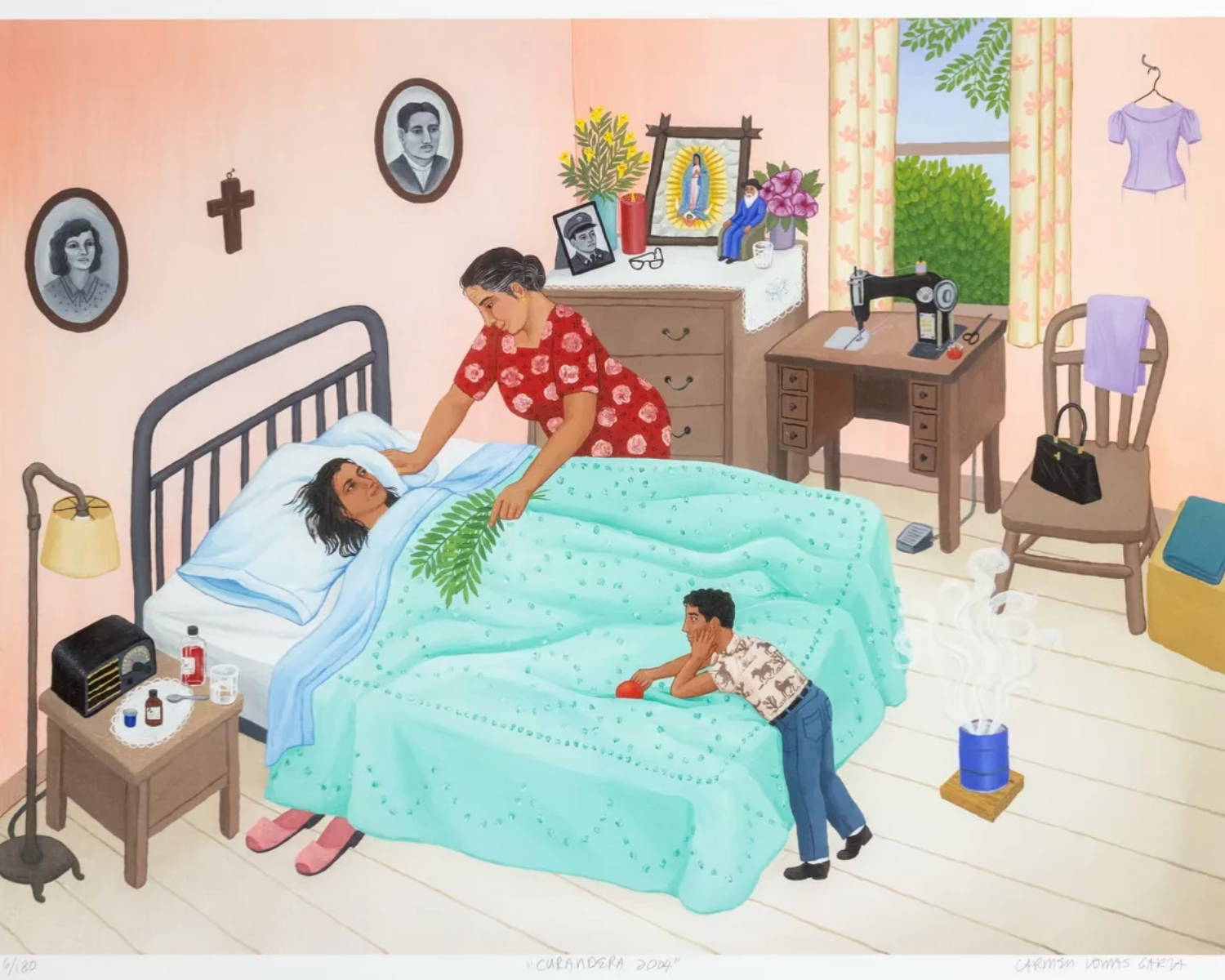
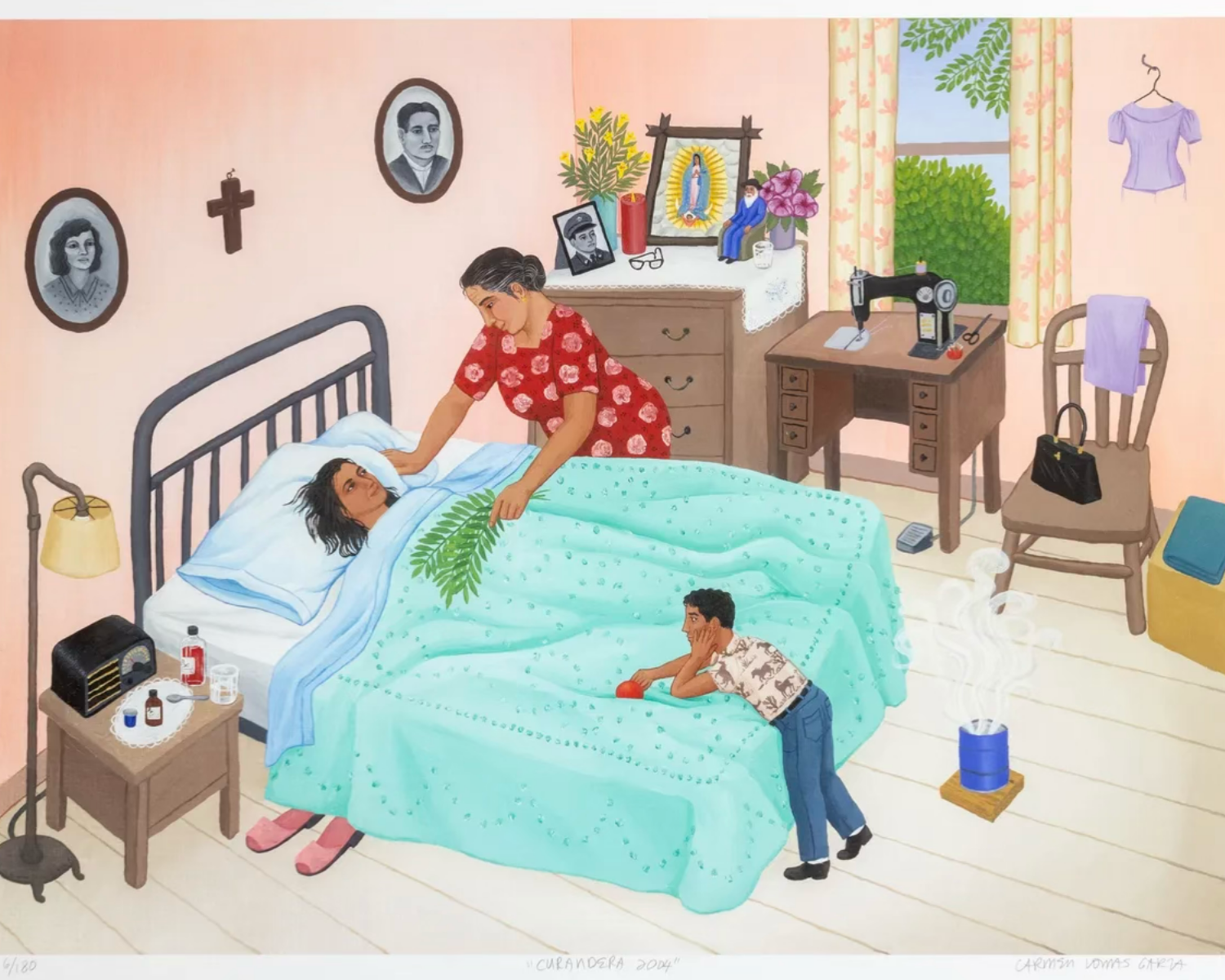
Banner photo credit: Carmen Lomas Garza, Curandera, 2004
Growing up in South Texas, there were many things that simply weren’t explained. Certain beliefs, traditions, and practices existed quietly in the background of everyday life. They were passed down through whispers, warnings, and observation more than conversation.
One of those traditions was the belief in ojo, the evil eye.
As children, we joked about it, but the adults in our family took it seriously. We were warned that if someone gave us ojo, we could become sick. The remedy was often a limpia, a cleansing performed with an egg and prayer.¹
At the same time, these practices carried a certain mystery. Growing up, I often heard older generations refer to them as brujería, or witchcraft, a word that created fear around the topic. Yet despite that stigma, these healing traditions remained deeply woven into the lives of many families across South Texas.
This project began as an attempt to better understand those traditions and, more specifically, the quiet women in my family like my Wela (Abuela), who prayed over candles and practiced limpias within our family.
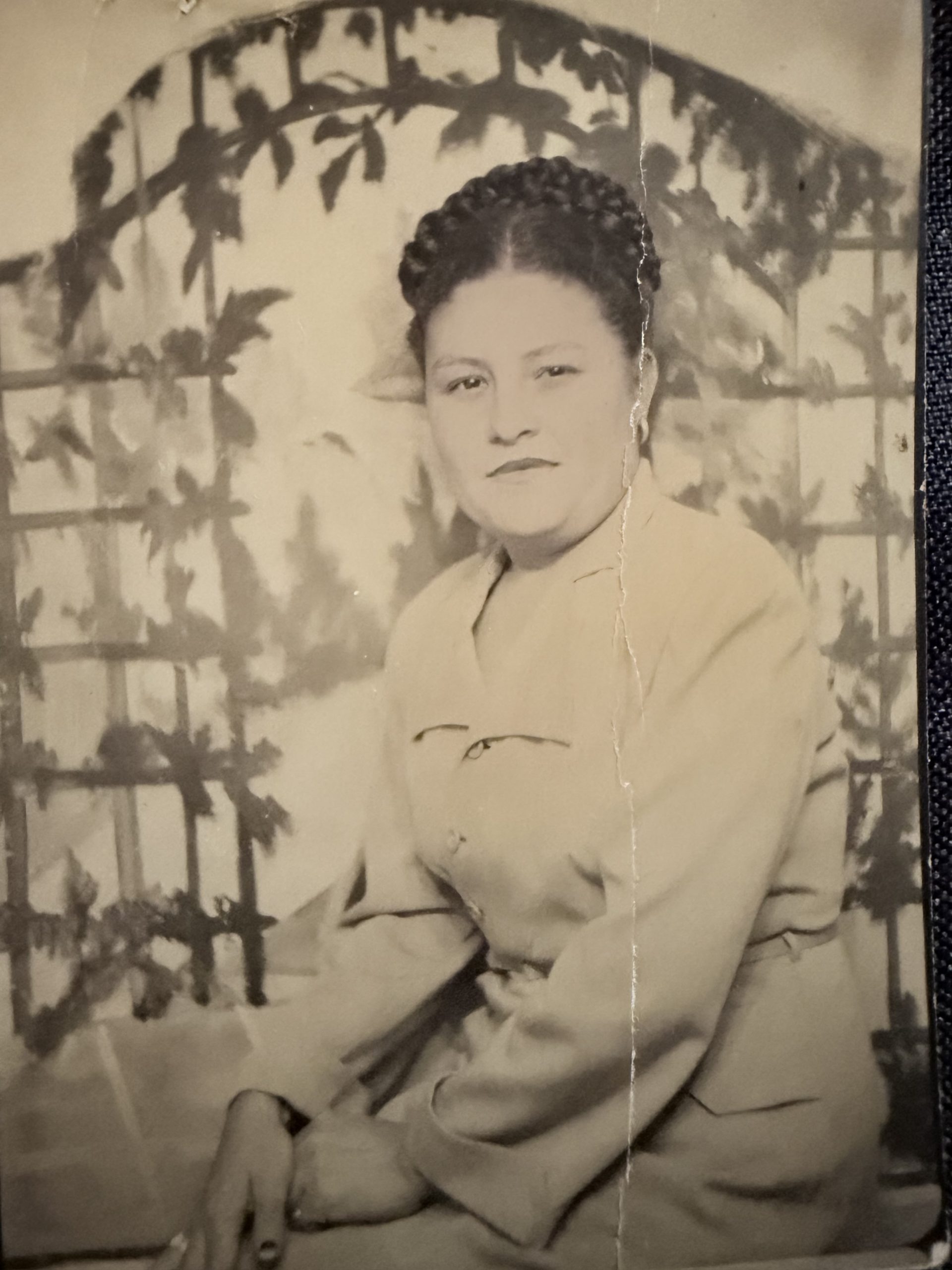
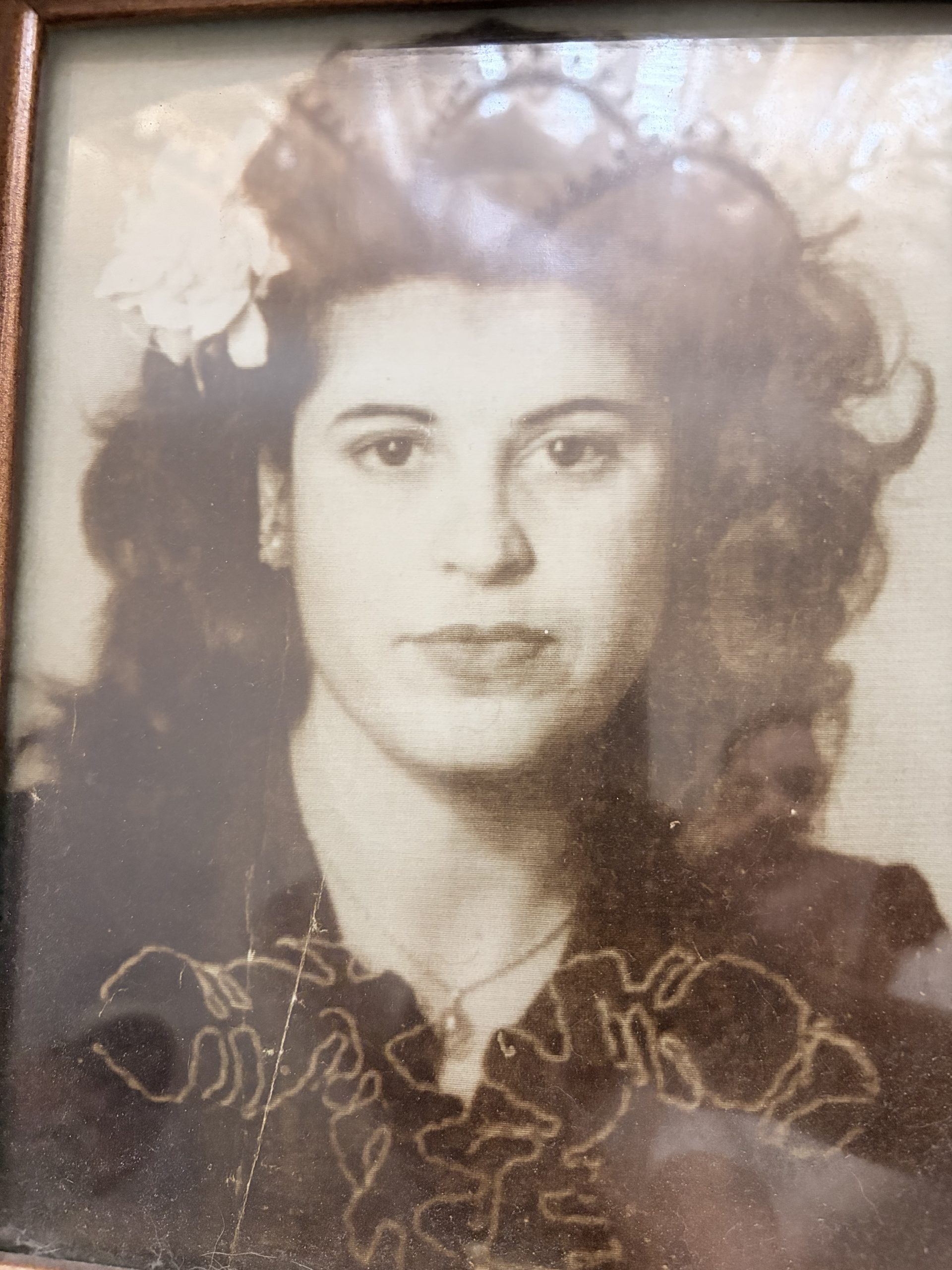
To begin, I returned to my hometown of Kingsville and started interviewing family members, including my father and my Tía Janie. Through those conversations, I realized many of the practices I once viewed as mysterious were rooted in care, protection, spirituality, and survival.
During my research, I also learned a new word: Curanderismo.
Curanderismo refers to traditional healing practices that combine spirituality, herbal remedies, prayer, ritual, and community knowledge. These traditions have roots in Indigenous, Mexican, and folk healing systems and continue to be practiced in different forms throughout Texas and the Southwest today.
When I explained the term curanderismo to my own family as natural healing rooted in culture and tradition, the conversation shifted. What once felt secretive or misunderstood suddenly felt more approachable.
¹ Limpias are traditional spiritual and energetic cleansing practices. Because they are deeply personal, methods and rituals vary widely depending on the practitioner and regional traditions. This content is for educational and informational purposes only
Healing as Self-Care and Survival
One aspect of curanderismo that stayed with me throughout this project was the idea that many of these practices may have also functioned as forms of emotional regulation and self-care for women who had limited outlets for stress, grief, or anxiety.
My grandmother lit candles constantly. She burned incense. She prayed. She practiced limpias.
As I reflected on those memories, I realized that while my generation may use different languages – such as therapy, mindfulness, meditation, yoga, nervous system regulation – we are often searching for many of the same things: peace, comfort, grounding, and healing.
That realization changed the way I viewed these traditions and my Wela.
For much of my life, she felt mysterious and emotionally distant to me. But through this project, I began to see her less as a strict matriarch and more as a woman trying to navigate hardship with the tools available to her.
That understanding became one of the most meaningful parts of this experience.
Learning From Community Voices
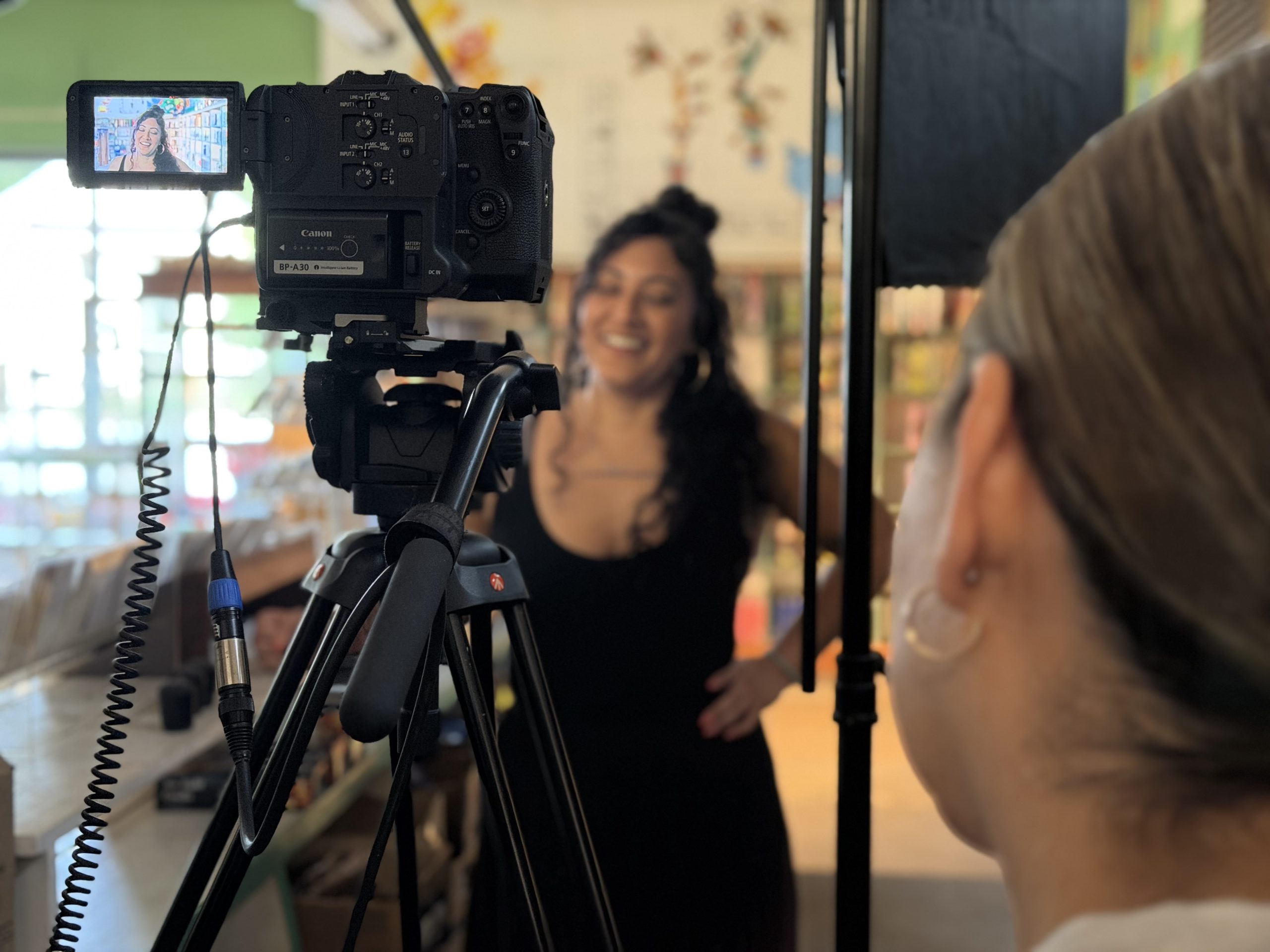
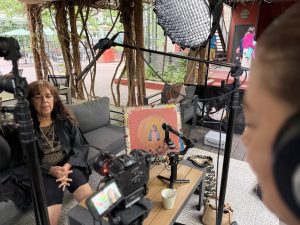
In addition to interviewing family members, I connected with practitioners from different generations who continue to engage with these traditions today.
Through Las Comadres, a women’s community group, I met Mary Jane Garza, who shared stories and insights about curanderismo and the role it has played in community healing.
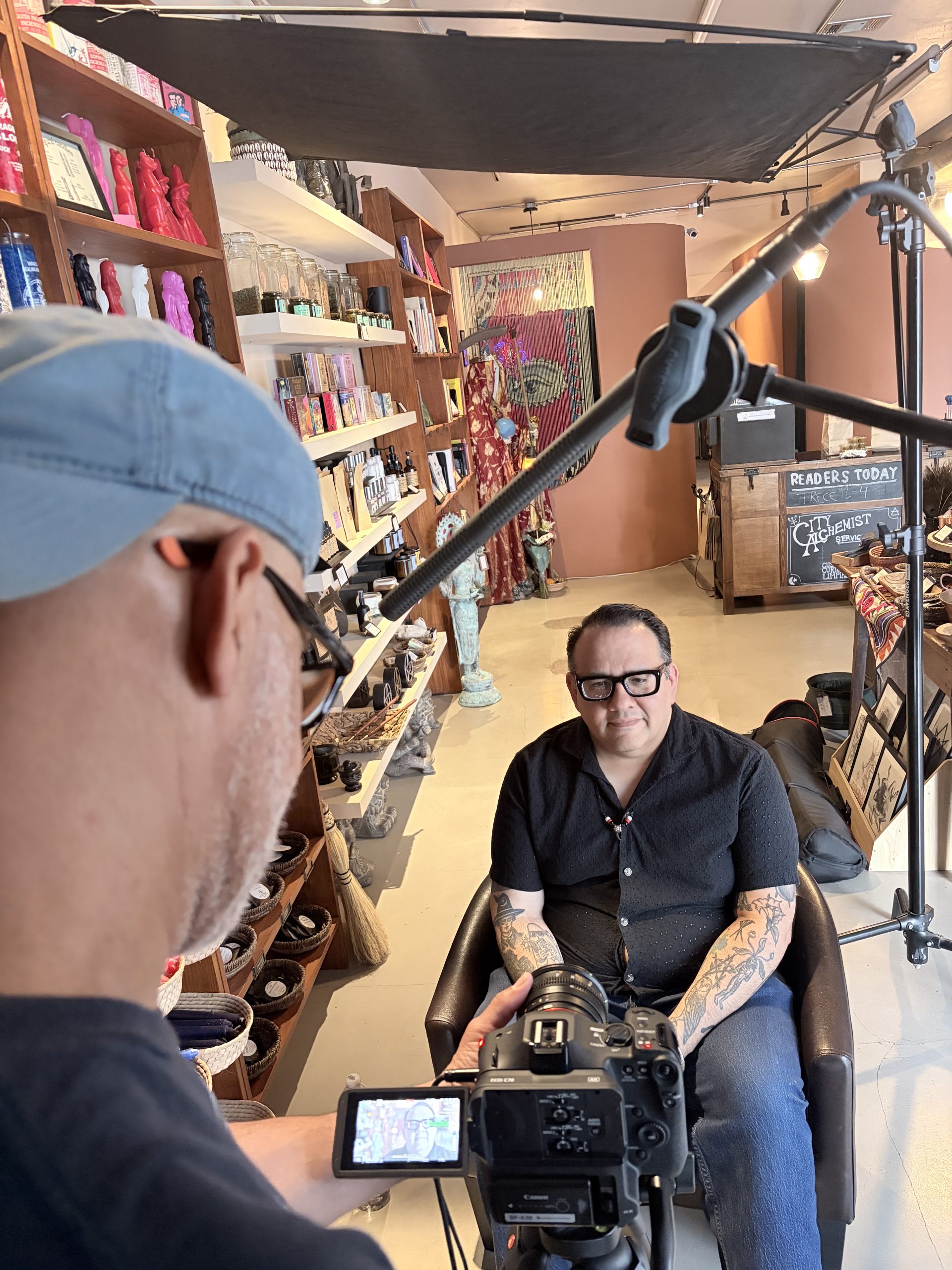
I also spoke with younger Curanderismo practitioners and business owners, including Elena Gonzales and Alexis Arredondo of City Alchemist, to better understand how these traditions are evolving for younger generations.
What stood out most in these conversations was the emphasis on intention, spirituality, emotional healing, and connection to ancestry and community. While practices may look different today, many people are still seeking ways to create meaning, grounding, and healing in their lives.
Personal Reflection
This project unexpectedly became about more than curanderismo.
It became about memory, lineage, and understanding the women in my family with more compassion.
Throughout the process, I often found myself wondering whether my Wela was searching for some of the same things many of us seek today: peace, clarity, protection, healing, and a sense of control in an unpredictable world.
In many ways, this project helped me reconnect with her.
The candles, prayers, incense, and rituals that once felt mysterious or even frightening no longer feel that way to me. They feel deeply human.
And now, when I light a candle after a difficult day or set an intention for myself or someone I love, I think of her.
Looking Ahead
This project is part of an ongoing exploration of storytelling, cultural memory, and Mexican American traditions in South Texas. I hope to continue documenting stories that preserve the voices, practices, and lived experiences of women whose histories are often overlooked or misunderstood.
Through this work, I hope listeners walk away not only with a better understanding of curanderismo, but also with curiosity and compassion for the traditions that shape families and communities across South Texas.
Additional Readings and Resources
How Curandero Don Pedro Jaramillo Became a South Texas Legend
On the Texas-Mexico Border, Folk Healers Modernize Their Ancient Practice – The New York Times
Understanding Curanderismo: The Folk Healing Tradition of Texas Hispanics
La Planta es la Vida: Plants and Curanderismo on San Antonio’s Westside
About Oddett Garza
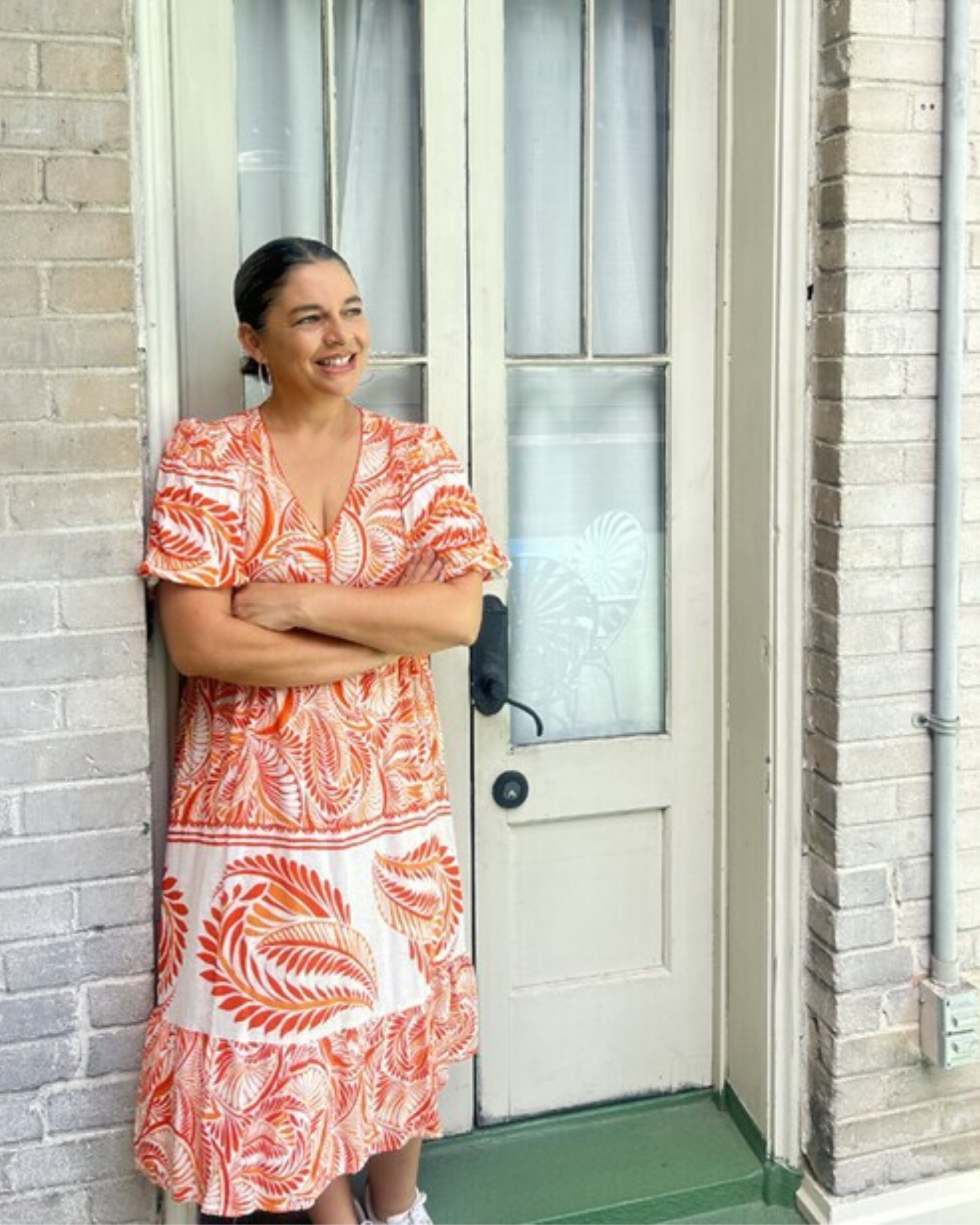
Oddett Garza is originally from Kingsville, TX, and is now based in Austin. She is an educator and filmmaker focused on intergenerational storytelling, community memory, and cultural preservation, with a focus on Tejana artists, educators, and activists whose contributions have been largely absent from mainstream historical narratives.
Summary of Project
Las Limpias is a podcast that visits memory and traditions from South Texas. Through conversations with family and cultural practitioners, it examines the practice of limpias, spiritual cleansings rooted in Mexican American traditions, and the cultural knowledge passed down through generations.
Part folklore, part oral history, and part cultural exploration, Las Limpias invites listeners to reflect on the ways people seek healing, protection, and connection in their everyday lives. From family stories and community rituals to questions of faith, identity, and belonging, the podcast documents living traditions that continue to influence contemporary culture while preserving voices and perspectives often absent from mainstream historical narratives.
Production Credits
Host, Producer, Editor, Story by: Oddett Garza
Assistant Editor: Amanda Goebel


![[Laura Yohualtlahuiz] wears an elaborate Mexica danza headdress with long feathers radiating outward in orange, red, and pink alongside brown-and-white patterned feathers. A beaded headband with colorful floral and geometric designs frames her face, which is marked with red linear face paint. She wears a gold septum ring and shell earrings, with a tattoo visible on one arm and a green and yellow patterned top. Warm lights glow in the background.](https://texasfolklife.org/wp-content/uploads/2026/08/Laura_Atlachinolli-614x346.jpg)